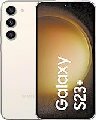
Design:
- The Galaxy S23+ is significantly more iterative inside and out than the S22+, as was already mentioned.
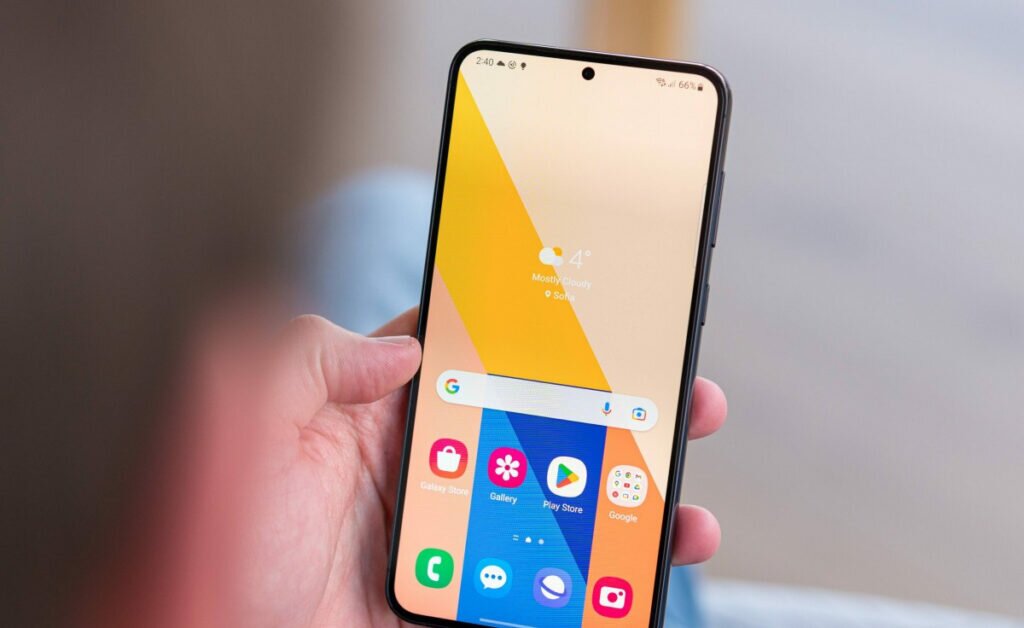
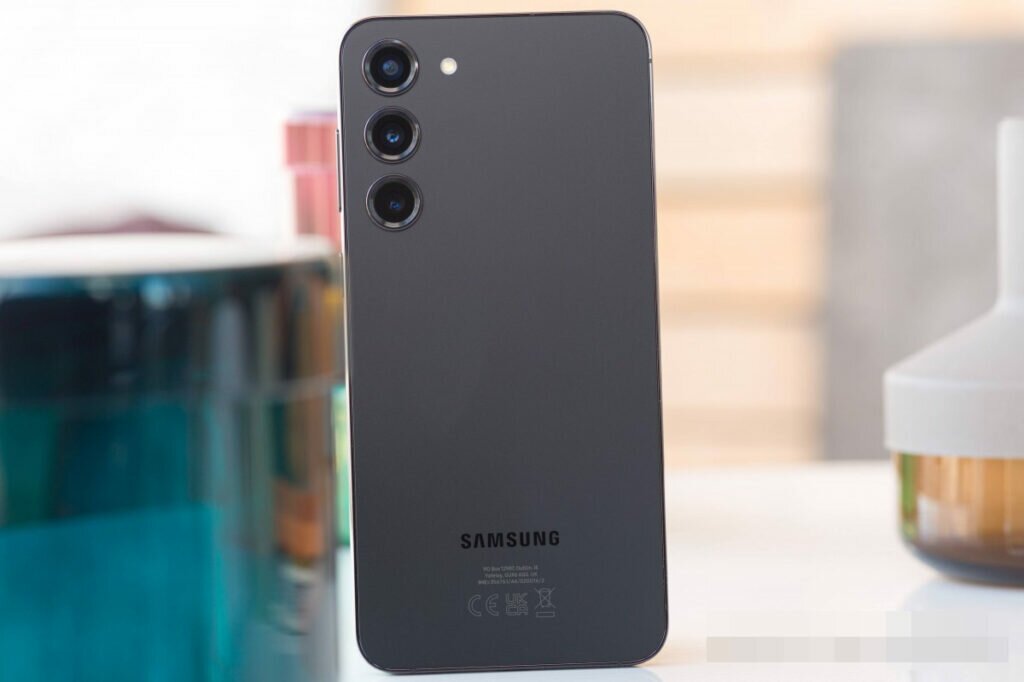
- The S23+ doesn’t have a camera island, which is the only feature that distinguishes the two designs.
- Instead, each of the three snappers sticks out from the phone’s rear by itself.
- The S23 and S23+ are more similar to the S22 Ultra and S23 Ultra because to their shared design.
- Other than that, the S23+ still has a familiar silhouette with nicely rounded corners and no sharp lines.
- Its overall look still has that distinct “Samsung” aesthetic going.
- We can’t quite put our finger on what exactly makes it look this way, but its nothing short of a testament to the excellent design work the Korean giant is doing.
Materials and build quality :
The Galaxy S23+ must meet high standards for durability. The phone appears to be extremely great on paper. Its front and back are both made of Gorilla Glass Victus 2, the follow-up to Gorilla Glass Victus+ from the previous year. According to Corning, its most recent glass generation maintains the scratch resistance of Gorilla Glass Victus while improving drop performance on harder surfaces like concrete.
The S23+ continues to use the well-known “sandwich” construction method, where two glass panels are attached to a solid centre frame. That frame is still constructed from a special metal alloy that Samsung refers to as “Armor Aluminum.” In use, it is extremely rigid and exhibits very little flex.
In actuality, the S23+ as a whole supports it. There is almost little chassis flex, which gives it a very solid feel.
The S23IP68 +’s ingress protection rating, which guarantees the phone will withstand up to 1.5 metres of fresh water for up to 30 minutes, is undoubtedly deserving of praise. This is just another bonus from Samsung’s Galaxy S series that we have come to expect, but it is still deserving of notice.
Controls :
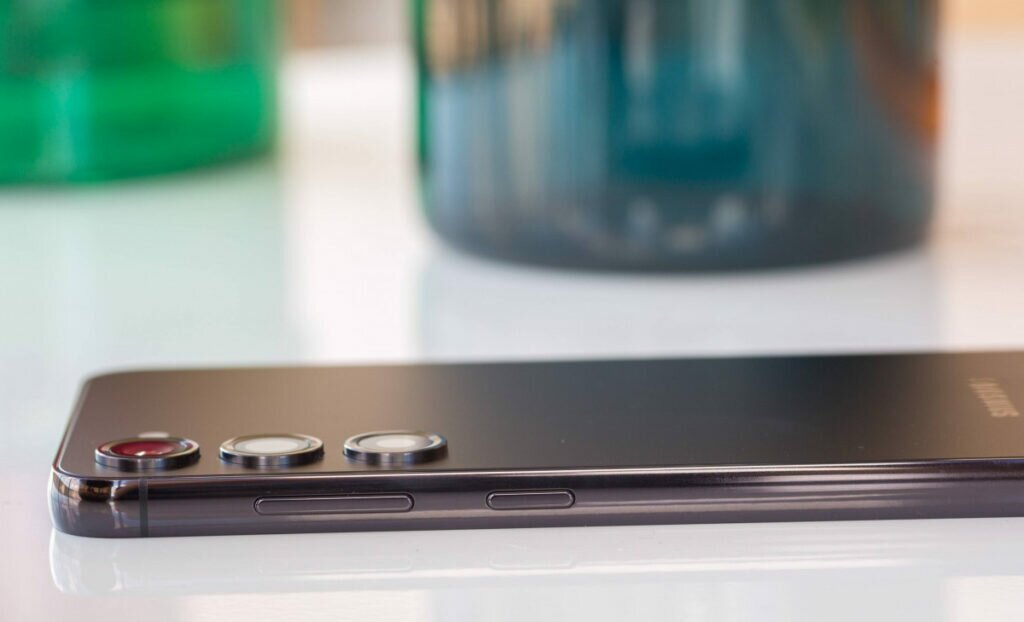
The layout and controls on the S23+ are not very innovative or unique. The power button and volume rocker are located on the right side, to start. These have good height positioning, and the buttons themselves have a satisfying clicky and responsive sensation.
The S23bottom +’s is a little busier. With Samsung’s standard PD+PPS charging, the Type-C USB port can charge at up to 45W and supports USB HOST. The primary microphone and the twin nanoSIM card tray are located next to that. Unfortunately, the Galaxy S23 family does not support expanded storage. The S23+ also has a bottom-firing speaker on this side. With the earpiece, it forms a hybrid stereo system.
The S23+ makes use of an ultrasonic fingerprint scanner located beneath the display, another long-standing Samsung flagship standard.
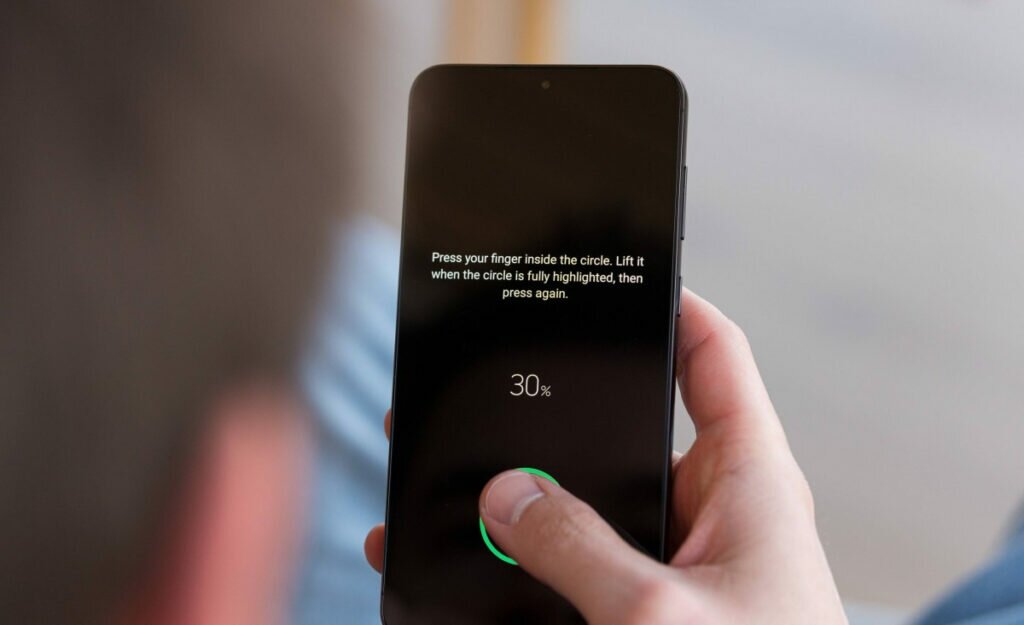
From one generation to the next, these sensors have gotten bigger and more effective. The ultrasonic technology used inside the S23+ is about as excellent as it gets right now. Nevertheless, these ultrasonic devices occasionally have more wonky design than contemporary capacitive readers. The S23reader +’s proved to be quite precise and moderately rapid during our tests. But only further testing will reveal whether this behaviour endures.
Connectivity :
A significant shift in Samsung’s semiconductor approach can be seen in the Galaxy S23 family. This generation’s Samsung Exynos chipset is not available. Instead, every unit—including those sold in Europe—is equipped with a Snapdragon 8 Gen 2 mobile platform. It has been specially tailored by Qualcomm for Samsung, as its name implies. For further information on that subject, head on over to the performance area.
The S23+ offers dual SIM and dual Standby SA/NSA/Sub6 5G in terms of network connectivity. Additionally, integrated eSIM support is available, however three-way simultaneous standby is not possible. In select markets, the S23+ also comes in a single-SIM configuration, but that is not the norm. Another variation with various internal antennas is mmWave. Expect to only see it on carriers that are supported.
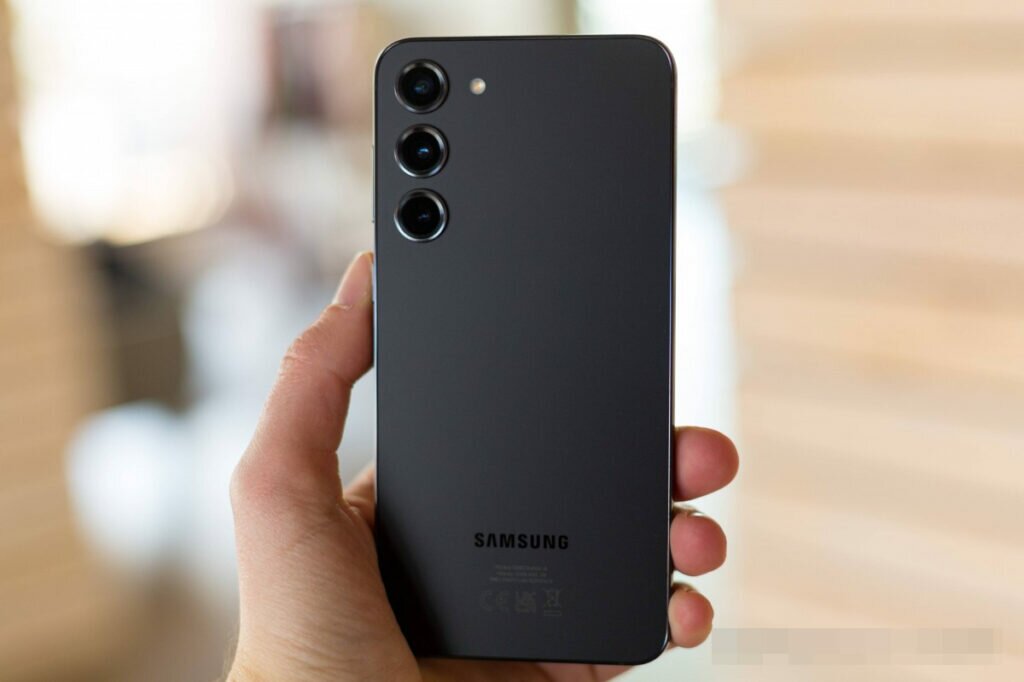
The S23+ has triple-band Wi-Fi 6e, NFC, and Bluetooth 5.3 with LE capability for local networking. Dual-band (L1+L5) GPS receivers and support for A-GPS, GLONASS, BDS, and GALILEO are available for positioning. The S23+ offers Ultra Wide Band (UWB) support, which is absent from the standard S23, just like the Ultra.
It is claimed that the S22Type-C +’s USB connector may support a USB 3.2 data connection. Unfortunately, this has minimal impact on real maximum speed given the current status of the USB protocol. With an external Thunderbolt drive, a PC with a Thunderbolt 3 connector, and an approved cable, we tested the speed and obtained approximately 5 GBps. Take what you will from that. On the plus side, you can use Samsung’s superb DeX interface as an add-on to output both video and audio over the Type-C connector.
6.6-inch Dynamic AMOLED 2X display that is stunning :
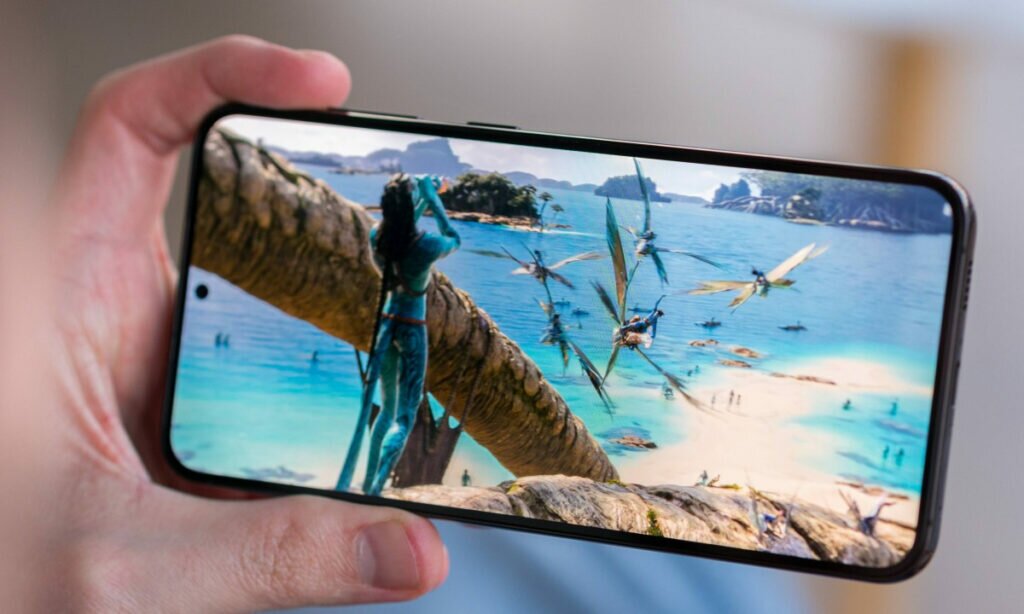
First, let’s talk about brightness. Some of you may recall the Galaxy S22 line’s advertised max brightness of 1,750 nits from the previous year. The good news is that it’s back for the S23 generation, and this time, all three of the phones ought to be able to reach that genuinely absurd amount. It should be evident that this is impossible with the full display gleaming white. In general, OLED screens operate in that manner.
The “Extra brightness” toggle, which was first introduced with the S22 series last year, is also back to slay. It differs from the maximum brightness that may be achieved in direct sunlight and only functions when auto-brightness is disabled. It is intended to enable further “manual brightness” on
battery power :
charging velocity :
streamlining its charging mechanism for a few years, and for the most part, it has been successful. Standardization has been the name of the game for Samsung charging, and not only internal standardisation, but also the adoption of industry charging standards that are forward-looking and future-proof, particularly Power Delivery 3.0 with PPS (Programmable Power Supply) support.
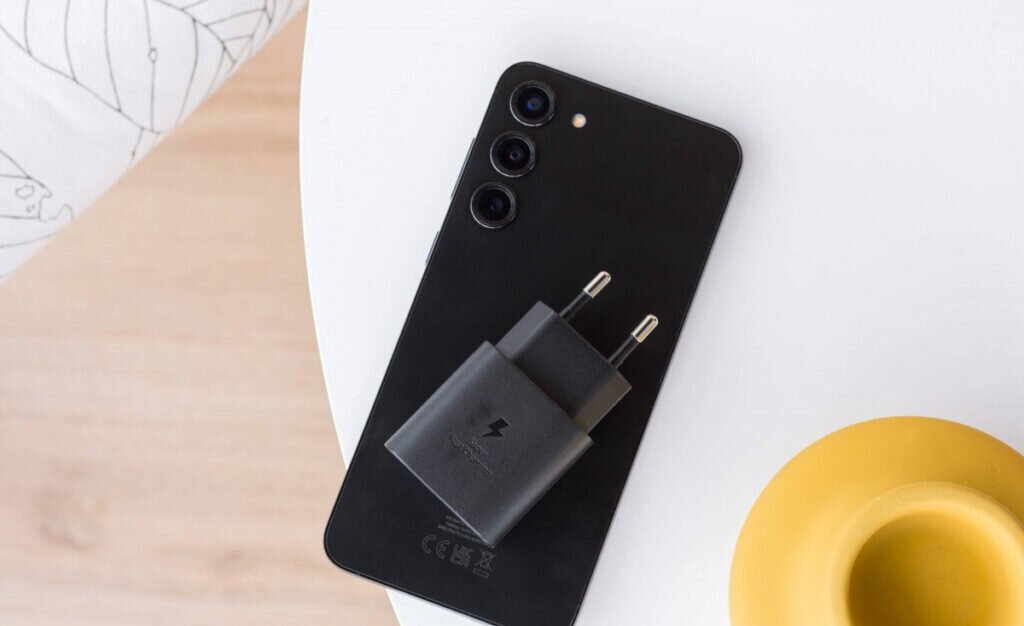
In general, adopting industry standards is a good thing, but Samsung has obviously had some difficulty doing so, particularly when it comes to wattage ratings. For better or worse, Samsung is still set on the same charging rates as before after fluctuating between 25W and 45W for a few generations. The S23+ and Ultra, specifically, offer 45W charging, but the standard S23 is only capable of 25W.
We chose to test charging on the S23+ with a 25W official Samsung charger and a 65W one just to be safe.
the same three cameras with a new selfie :
The Galaxy S23+ and standard S23 use almost the same rear camera configuration as previous year’s versions. The three cameras include a 12MP ultrawide, a 10MP 3x telephoto, and a 50MP primary camera. The selfie camera has increased in resolution from 10MP to 12MP for this model year.
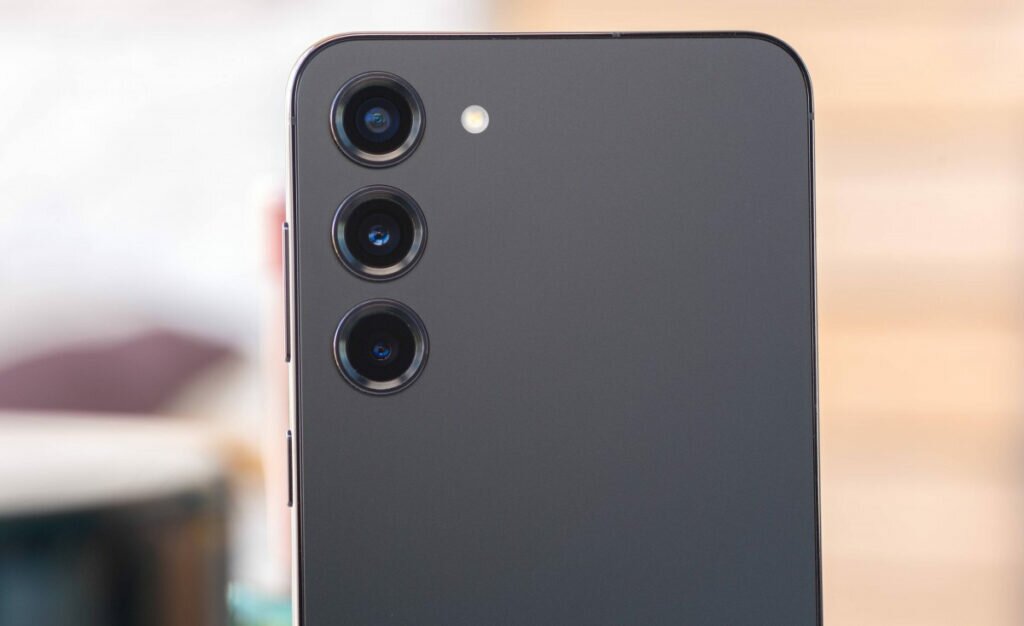
When looking at the camera equipment, the main 50MP camera is based on the Samsung S5KGN3 1/1.57 “Tetracell filter and 1.0 m pixel sensor. With Dual Pixel autofocus, this sensor has an f/1.8 optically stabilised (OIS) lens attached to it. This camera, which is identical to the one on the Galaxy S22+, also saves photographs in 12MP resolution rather than the anticipated 12.5MP.
A 12MP Sony IMX564 sensor with a 1/2.55″ dimension and 1.4 m individual pixels serves as the foundation for the ultrawide camera. It is positioned in front of an f/2.2 lens with an infinity focus.
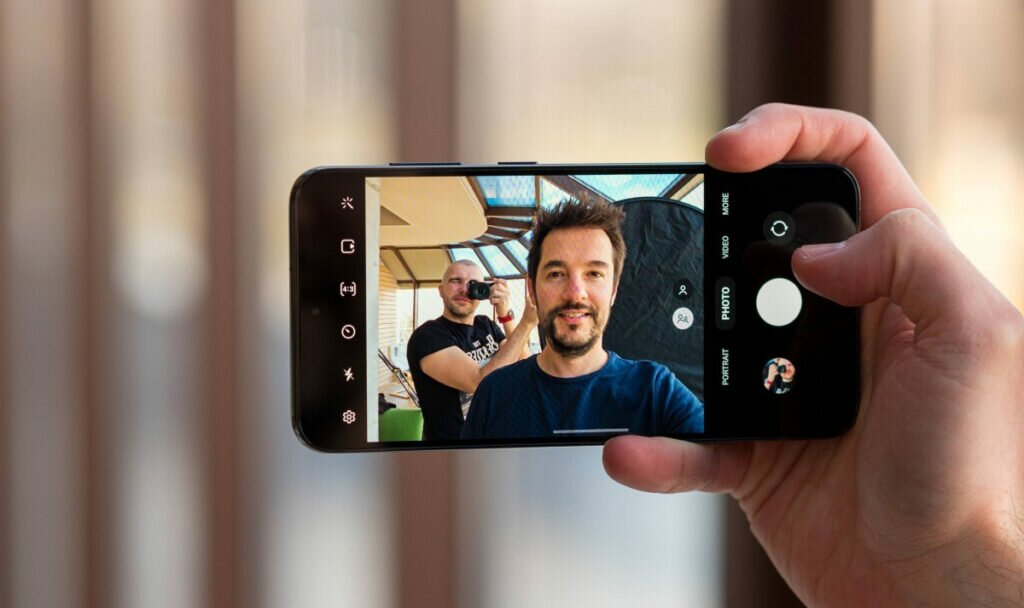
The new selfie camera also features a 25mm f/2.2 lens and a 12MP Samsung S5K3LU sensor with a 1.12m pitch. As usual, there is dual-pixel PDAF. The front camera on several prior versions, including the Galaxy S22+, utilised 10MP sensors.
These days, every Samsung phone comes with the identical camera app. All of the various modes may be switched between by swiping left and right, and some of the modes can be moved around or eliminated entirely from the viewfinder. Both horizontal and vertical swipes will toggle between the front and back cameras.
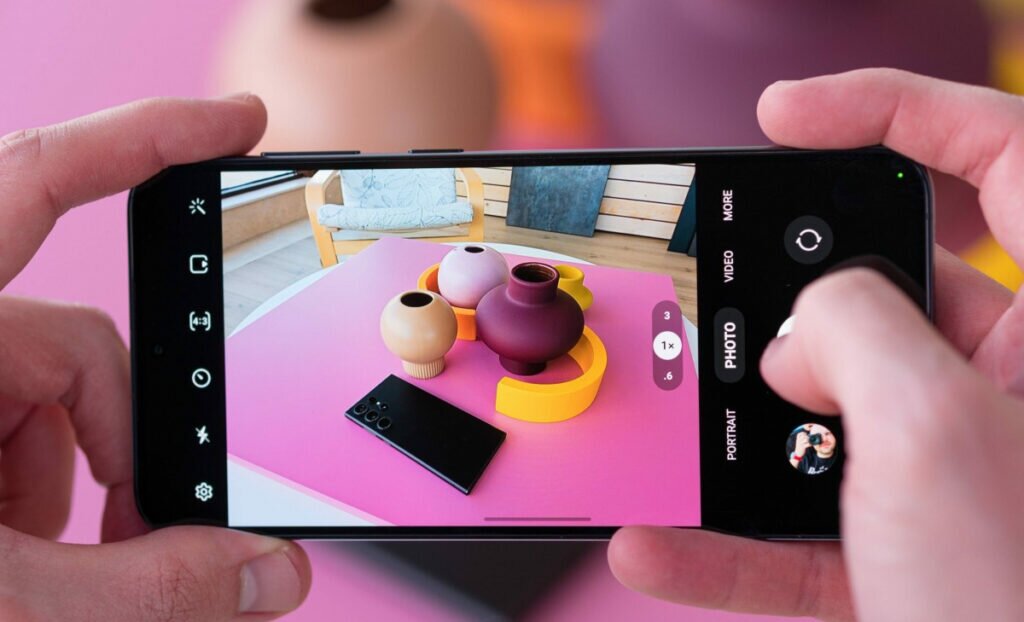
The viewfinder has three zoom shortcuts:.6x, 1x, and 3x. You may access the 2x, 10x, 20x, and 30x zoom levels by tapping on any of them.
It is a bit counterintuitive to activate the full resolution setting on the primary camera from the aspect options.
You can fine-tune the cameras using the settings icon, which is in the upper left corner of the screen. Given that there aren’t many settings overall, there aren’t distinct setting screens for photos and videos. The typical information is available, such as gridlines and location information. The Scene optimizer can also be turned on and off.


