Introduction :
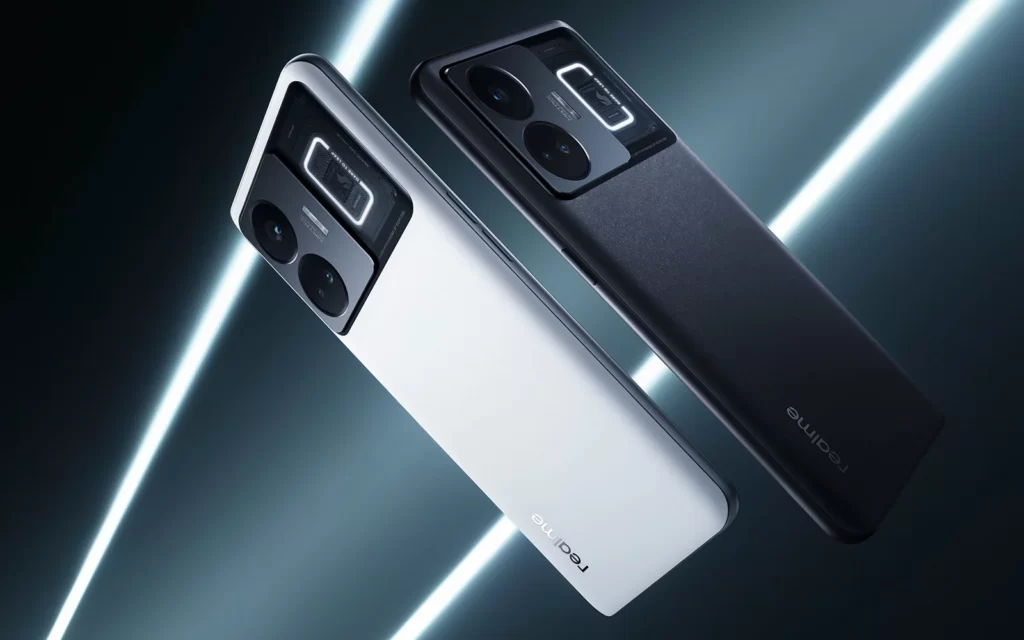
The Realme GT3 is the Realme GT2’s straight successor from this year as well as the Realme GT Neo 3’s spiritual successor. In fact, the GT3 is essentially a rebranded Neo 5 240W. It is true that 240W stands for 240W fast charging, making it the current fastest charging speed for a widely available smartphone.
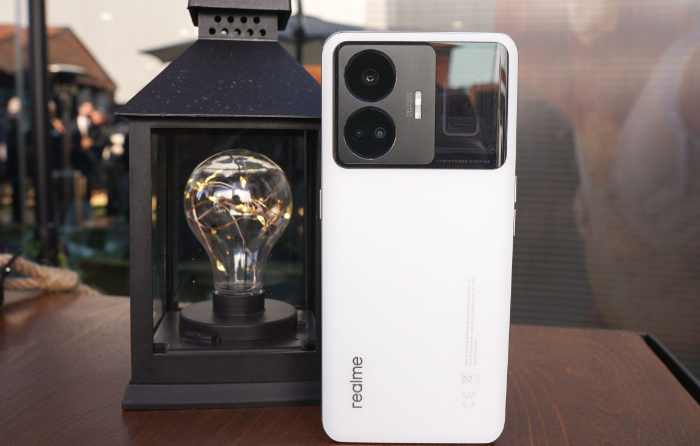
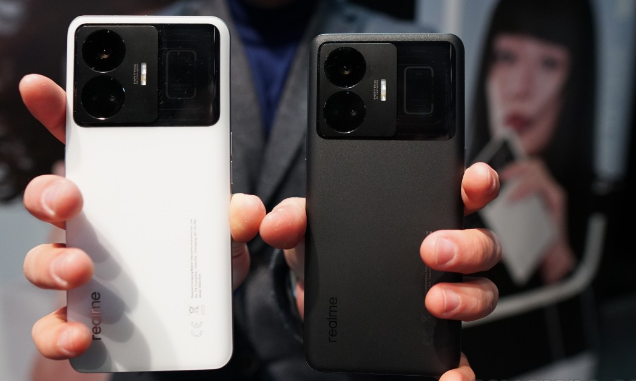
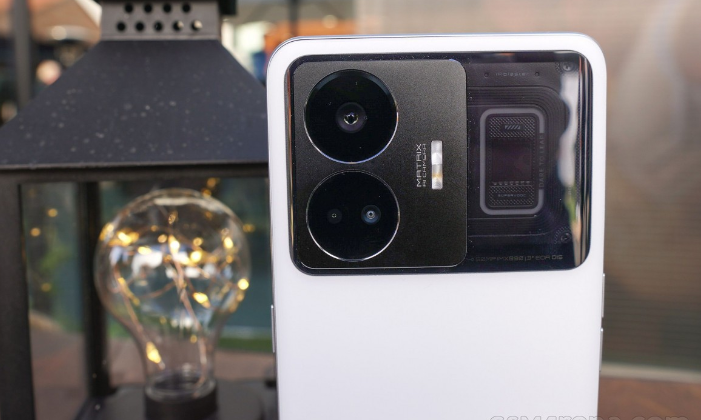
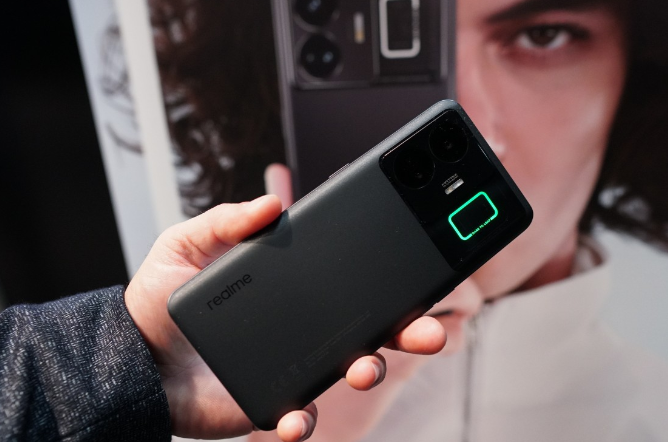
The new edition has a large camera island on the back, RGB LEDs, and a tiny transparent cutout that allows you to see the chipset directly.
Key points about the Realme GT3 :
- Body: 163.9×75.8×8.9mm, 199g; glass front and back, plastic frame; Illuminated RGB (on the back).
- Display: 6.74″ AMOLED, 1B colors, 144Hz, HDR10+, 500 nits (typ), 1100 nits (HBM), 1400 nits (peak), 1240x2772px resolution, 20.12:9 aspect ratio, 451ppi.
- Chipset: Qualcomm SM8475 Snapdragon 8+ Gen 1 (4 nm): Octa-core (1×3.19 GHz Cortex-X2 & 3×2.75 GHz Cortex-A710 & 4×1.80 GHz Cortex-A510); Adreno 730.
- Memory: 128GB 8GB RAM, 256GB 12GB RAM, 256GB 16GB RAM, 512GB 16GB RAM, 1TB 16GB RAM; UFS 3.1.
- OS/Software: Android 13, Realme UI 4.0.
- Rear camera: Wide (main): 50 MP, f/1.9, 24mm, 1/1.56″, 1.0µm, PDAF, OIS; Ultra wide angle: 8 MP, f/2.2, 16mm, 112˚, 1/4.0″, 1.12µm; Microscopic: 2 MP, f/3.3, 20mm (microscope).
- Front camera: 16 MP, f/2.5, 25mm (wide), 1/3.09″, 1.0µm.
- Video capture: Rear camera: [email protected]/60fps, [email protected]/60fps, gyro-EIS; Front camera: [email protected], gyro-EIS.
- Battery: 4600mAh; 240W wired, PD, 1-50% in 4 min, 1-100% in 10 min (advertised).
- Misc: Fingerprint reader (under display, optical); Infrared port; stereo speakers
However, some of the hardware, especially the camera setup with a 50MP main camera, an 8MP ultrawide camera, and a 2MP macro camera, has been carried over from the Realme GT2 from the previous year. Technically, Oppo’s flagship versions were the only ones with a microscopic lens; the 2MP macro has this feature. As opposed to the pointless 2MP macro sensor that everyone uses on their phones, we like the shift because it adds a little more value.
Design :
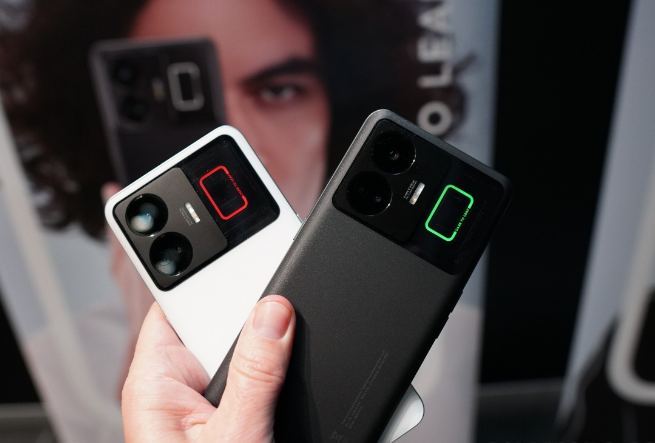
Similar to the Xiaomi Mi 11 Ultra’s camera component, this one is made of a metal piece enclosing the three cameras and a glass sheet enclosing the LED light. If you keep your phone face-down on the desk, this LED light will put on a nice indoor show even though it isn’t very visible outside. The LED can, of course, be used as a notification and charging sign.
You can see the Snapdragon logo and the actual chipset when the angle and lighting are just perfect. Although it could just be a label, we believe it to be the genuine article. We have seen this kind of application before.
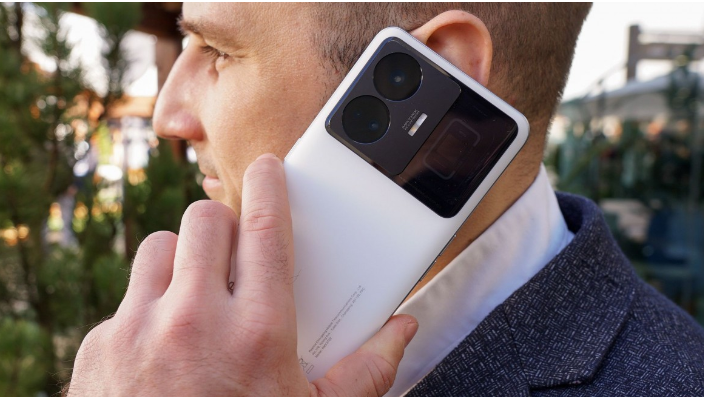
The large 6.74-inch display on the front has a hole in the middle for the selfie camera and extremely thin bezels all around. Additionally, the GT3 is a difficult phone to use with one hand due to its large screen. Surprisingly, despite weighing slightly less than 200 grammes, the gadget doesn’t feel as substantial as we had anticipated.
The large 6.74-inch display on the front has a hole in the middle for the selfie camera and extremely thin bezels all around. Additionally, the GT3 is a difficult phone to use with one hand due to its large screen. Surprisingly, despite weighing slightly less than 200 grammes, the gadget doesn’t feel as substantial as we had anticipated.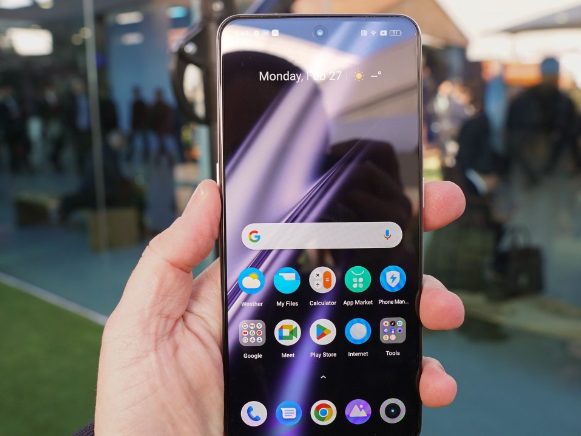
Hardware and performance :
The screen is arguably the most significant improvement over the prior generation. The new display has a larger 1240 x 2772px resolution, runs at 144Hz, enables 10-bit colour depth, and is larger. It is also supposed to be brighter, with a peak spot luminosity of up to 1,300 nits, and formally support HDR10+. In terms of specs, it’s without a question the best display Realme has used to date. That will be put to the proof in our upcoming comprehensive review.
Given that the stock GT2 debuted with a 2021 flagship chipset, the Snapdragon 888 to be precise, it shouldn’t come as a huge surprise that it is powered by last year’s top-tier Snapdragon 8+ Gen 1 SoC. But this time, the gadget uses the enhanced Plus variant of the processor. We performed a few evaluations, and it appears that the GT3 is effectively utilising the SD8+ Gen 1. Here is how it compares to the best SoCs from the previous two years.
Camera :
The camera’s hardware hasn’t altered much in general. The 50MP 1/1.56″, 1.0m sensor with multi-directional PDAF and optical image stabilisation is still used by the primary camera. Although the lens is now f/1.9 rather than f/1.8, we don’t think this will actually make a discernible difference in the real world.
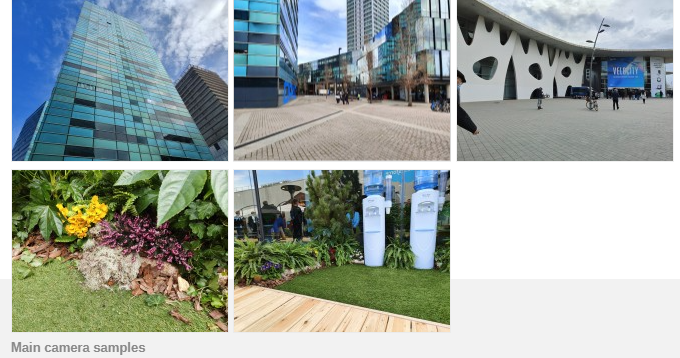
The ultrawide is an 8MP f/2.2 camera that is frequently used, but it is only sold with a 112-degree field of view, down from 119 degrees the year before. Additionally, the macro camera has been changed with a 2MP camera and a tiny f/3.3 lens. We welcome the change since this one is probably more practical than the 2MP macro camera that everyone uses.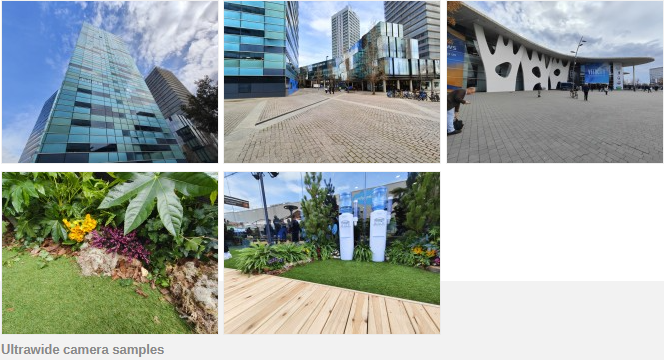
Charging :
The GT3’s standout feature this year is without a question the fastest charging technology ever used in a commercial smartphone. Utilizing its own charging brick and cable, the handset allows wired charging up to 240W. A special 12A charging cable that can manage the current had to be created by Realme.
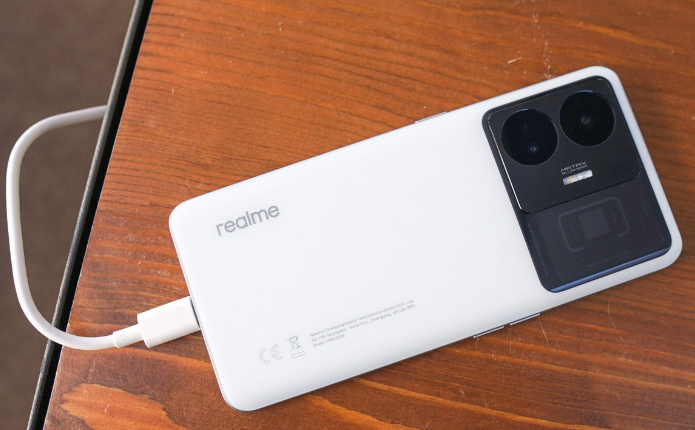
On the other hand, the charger’s size is remarkably “normal.” Although it is a little chunky, it is not what we anticipated for a 240W adapter. And it’s not even large enough for a laptop. The business was able to do this by utilising a dual GaN mini design, which was essential for controlling the size.
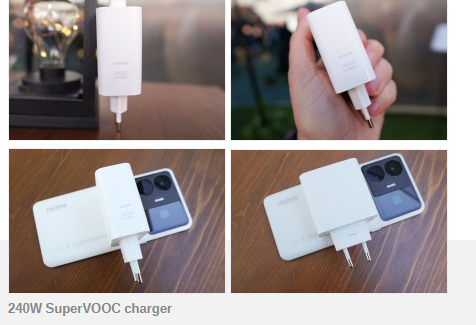
The company has added more than 60 layers of protection to the charging process, and the battery is the first in the world to handle over 200W charging. It’s fairly remarkable on its own, if true, that the battery will retain 80% of its capacity after 1,600 charging cycles, according to a TÜV Rheinland certification.
The GT3 also outperforms the Realme GT Neo 3 150W from last year, which could charge its 4,500 mAh cell in just 16 minutes, as one might anticipate. According to its advertising, the GT Neo 3 can complete that task in under ten minutes. And based on our early tests, that might prove to be true.
Charging torque :
We regained 30% of the charge after the first three minutes, 52% after five minutes, and 77% after less than eight minutes. The device wasn’t even close to being hot, which is the greatest part. Yes, a little toasty.
In our comprehensive review, we’ll make sure to fully test the charging speed, but for now, this ought to suffice.
Early opinion :
Despite its comparatively high price, the Realme GT3 is an affordable flagship with a few unique features. The latter appears to be a problem with all phones coming out in 2023, making it seem typical in the context of this year. It still has a lot of high-end functions and is a fast smartphone. And it’s a significant improvement over the Realme GT2 from the previous year.
The GT3’s fast charging technology is undoubtedly its greatest asset, and unlike some other phones that try to entice customers with gimmicky, “world’s first” features, Realme’s offering is truly bringing a useful world’s first tech. The GT3 appears to have a legitimate place in 2023 at first glance, but we must still run the device through our standard battery of tests. Check back for our full review.
Realme GT3 specification :
Realme GT3