Introduction :
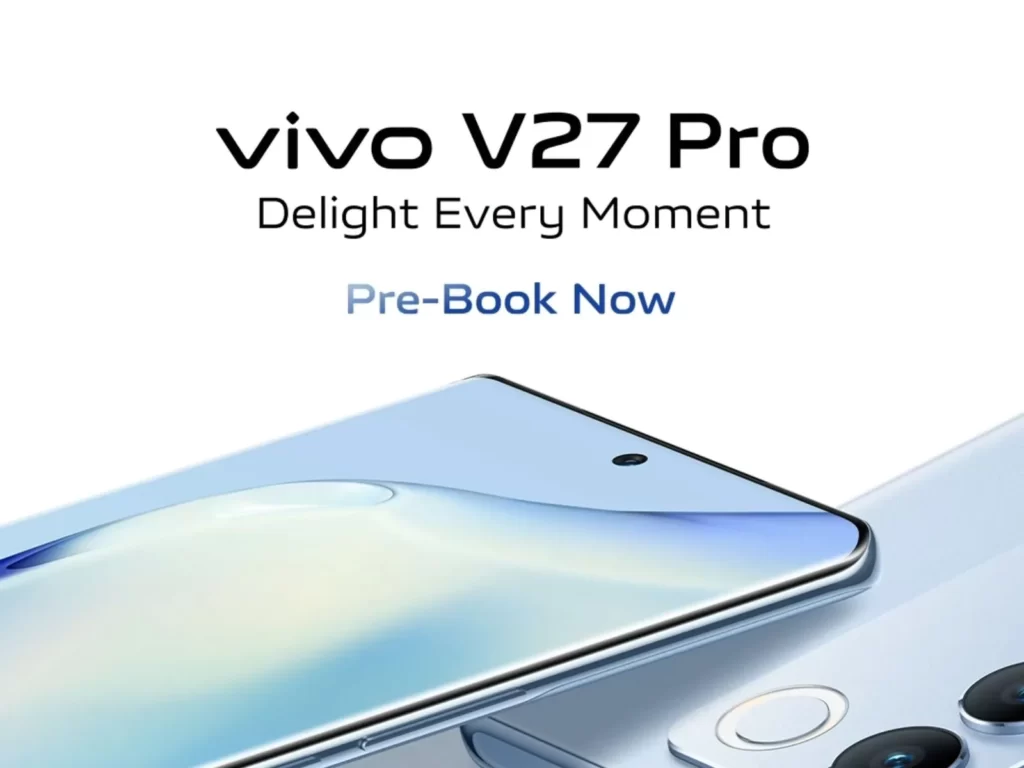
The vivo V27 trio, which includes the regular V27 with an emphasis on rear camera quality, the toned-down V27e, and the amplified V27 Pro with flagship-grade performance and premium camera quality across both sides, is now officially available. The vivo V27 Pro, the group’s most intriguing member, will be our focus today.
Over the prior V23 Pro and V25 Pro, the new vivo V27 Pro represents a significant improvement. Even though they were both camera-focused midrangers, this one beats them out thanks to its allegedly superior camera kits and flagship-caliber processor. Additionally, it has a bigger display while still maintaining the familiar thin and light design.
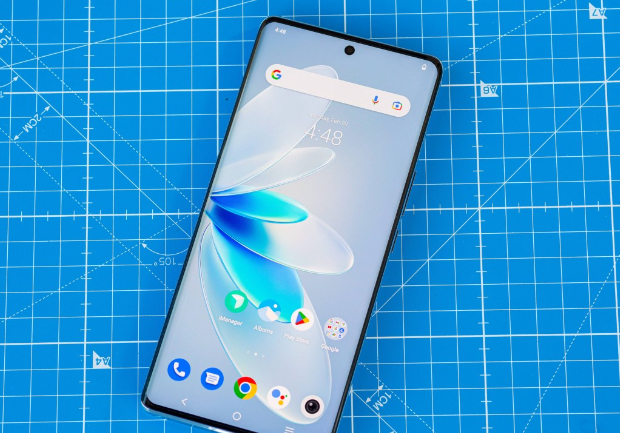
Starting with the appearance, it is similar to the V23 Pro and V25 Pro because it has a color-changing back screen and is still only 7.4mm thin. However, the vivo V27 Pro has a bigger 6.78-inch AMOLED screen with a 120Hz refresh rate and a 1080p resolution.
The new chipset, the MediaTek Dimensity 8200, a SoC manufactured on a more productive 4nm process as opposed to the 6nm Dimensity 1200 and 1300 found inside the earlier models, is one of the most significant key features. The speed of the CPU and GPU is greatly enhanced, new RAM and storage are supported, the ISP is improved, and the connectivity options are increased.
Another improvement is the camera, which now has three cameras on the back: a 50MP OIS main, an 8MP ultrawide, and a 2MP macro. A 50MP front-facing camera with a wide-angle lens and autofocus support, which is an upgrade over the V25 Pro but a slight downgrade from the 50MP+8MP+dual-LED flash front setup on the V23 Pro, is quite encouraging.
A 4,600mAh battery powers the vivo V27 Pro, which also supports 66W rapid wired charging. The newest vivo software, currently Android 13 with Funtouch 13, starts the new smartphone.
Vivo V27 Good features in a brief :
- Body: 164.1×74.8×7.4mm, 182g; glass front, glass back, plastic frame.
- Display: 6.78″ AMOLED, 120Hz, HDR10+, 1080x2400px resolution, 20:9 aspect ratio, 388ppi.
- Chipset: Mediatek Dimensity 8200 (4 nm): Octa-core (1×3.1 GHz Cortex-A78 & 3×3.0 GHz Cortex-A78 & 4×2.0 GHz Cortex-A55); Mali-G610 MC6.
- Memory: 128GB 8GB RAM, 256GB 8GB RAM, 256GB 12GB RAM; UFS 3.1.
- OS/Software: Android 13, Funtouch 13.
- Rear camera: Wide (main): 50 MP, f/1.9, 1/1.56″, 1.0µm, PDAF, OIS; Ultra wide angle: 8 MP, f/2.2, 16mm, 120˚, 1/4″, 1.12µm; Macro: 2 MP, f/2.4.
- Front camera: 50 MP, f/2.5, (wide), AF.
- Video capture: Rear camera: [email protected], [email protected]; Front camera: [email protected], [email protected]
- Battery: 4600mAh; 66W wired, 50% in 19 min (advertised).
- Misc: Fingerprint reader (under display, optical); NFC.
We were hoping for some type of officially certified splash protection as well as stereo speakers, but neither of those things materialised. We believe that the V series needs binaural speakers at this point.
Design :
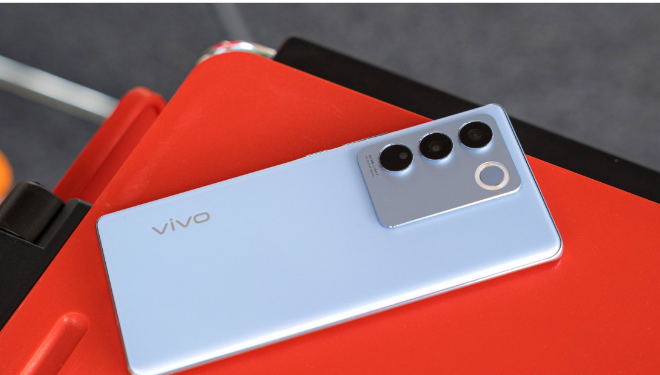
A cleverly concealed element of the attractive smartphone vivo V27 Pro is a color-shifting back panel. Similar to the V25 and V23 versions, it is a dual-glass handset with a plastic frame and has a noticeably thin and light body.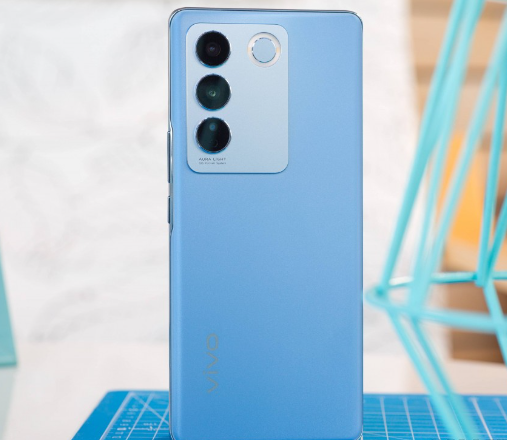
The V27 Pro‘s two sides are curved inward towards its longer edges, giving it a premium-looking curved form, but it also makes the phone difficult to hold. The frame is smooth around the top and bottom edges, incredibly thin across the left and right, and made of plastic with a glossy finish.
Compared to the V25 Pro, the rear glass seems to use a less saturated light blue (called Magic Blue), but it is still color-shifting, and the entire device is fingerprint-resistant due to the unique matt finish. Brilliant Black, another colour option for the V27 Pro, has no such impact.
Let us briefly clarify if you are unfamiliar with the series and the concept of the colours changing. As a result of the paint’s reaction to UV radiation, the colour darkens. With some items, you can create shadows that act as temporary “paint” on their backs.
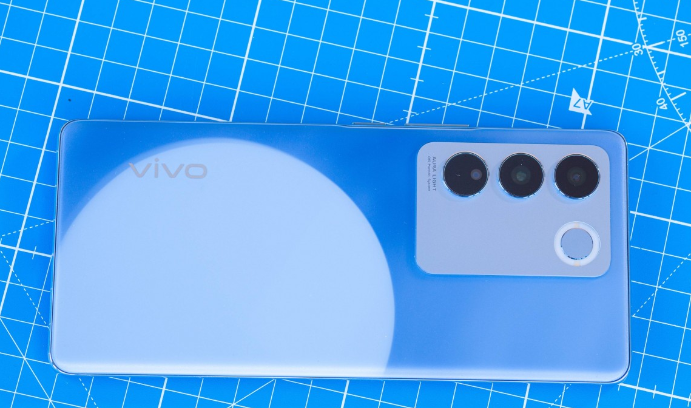
If you want to see the deep blue colour, you should use a UV flashlight, so the ideal place to play with this cool panel is in the sun. It’s a nice trick, and this reviewer has experimented with the panel and its effects for a few days, but we must confess, it wears off rather quickly.
The protective glass covering the top of the screen is unknown to us; however, since vivo frequently employs Schott Xensation in its models, it may once again be that particular brand.
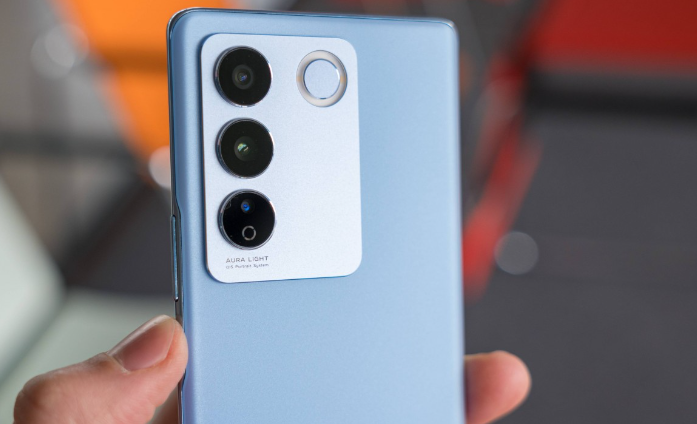
Due to the camera housing sticking out the rear of the vivo V27 Pro, it wobbles slightly when placed on a flat desk. However, it’s not as bothersome as on some flagship models and can be prevented if you choose to use the included case.
Display :
The 6.78-inch AMOLED screen used by the vivo V27 Pro has an extended 1080p resolution, a 120Hz refresh rate, and HDR10+ compatibility. The panel is protected by a glass that is slightly curved and has a tiny perforation.
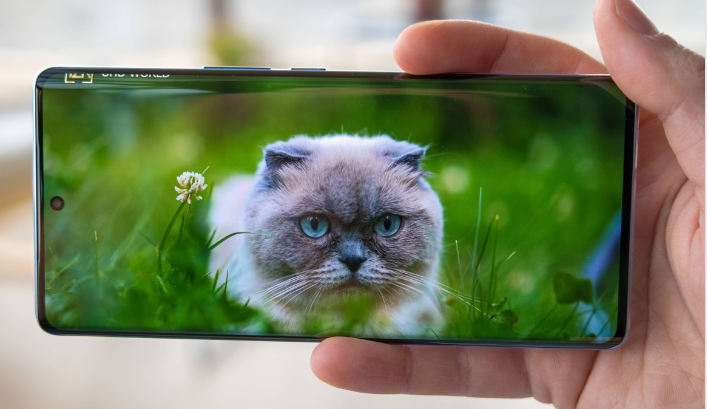
The screen has a precise resolution of 1,080 x 2,400 pixels, or 388ppi, an 8-bit colour depth that supports more than 16 million colours, and wide-color support.
There is no certified brightness data from the manufacturer. After finishing our display test, we discovered that the highest brightness we could achieve with manual adjustments was around 480 nits. According to the V25 Pro and V23 Pro screens, that is accurate.
Naturally, the screen can appear brighter when Auto Brightness is enabled and exposed to strong light. With this method, we recorded 680 nits, which is an improvement but lower than the 800 nits we obtained with the older models.
Refresh rate :
The vivo V27 Pro screen has a frame rate of 120Hz. The three fixed steps—60Hz, 90Hz, and 120Hz—are supported by hardware scanning apps, but no matter what we did, we couldn’t get the screen to use the 90Hz choice.
Similar to what we’ve seen on most contemporary phones, the vivo V27 Pro offers three refresh rate modes: 60Hz, 120Hz, and Smart Switch.
The 60Hz option is simple; the phone’s refresh rate is set to 60Hz at all times, and all applications are limited to 60 frames per second.
Similar to how the Smart Switch mode operates, the 120Hz mode switches to 60Hz for static images, video playback (but not video UI), and incompatible apps like Google Maps and the Camera app. Both modes use the full 120Hz across the user interface and some supported apps. If enabled, HFR gaming is also possible in both modes.
The Smart Switch setting is a little more limited; it evaluates the programme before determining whether or not to use 120Hz. We discovered that 60Hz is the maximum frequency supported by web browsers, office applications, and video streaming services like Netflix. In truth, only 60Hz was supported by half of the apps we tested.
Battery life :
battery power Despite having a larger body, the vivo V27 Pro’s 4,600 mAh battery has a marginally smaller capacity than the 4,800 cell in the V25 Pro. Support for 66W rapid wired charging is available.
Our battery life test is now complete, and the results are quite remarkable. The vivo V27 Pro received an exceptional 121-hour endurance grade. All evaluations, including calls, web browsing, and movie playback, were excellent.
Charging speed :
Although the vivo V27 Pro supports 66W FlashCharge, it also comes with an 80W FlashCharger and an 8A USB connection, just like a flagship like the vivo X90 Pro.
The vivo V27 Pro won’t use more than 66W, as anticipated, even with the more potent power adapter.
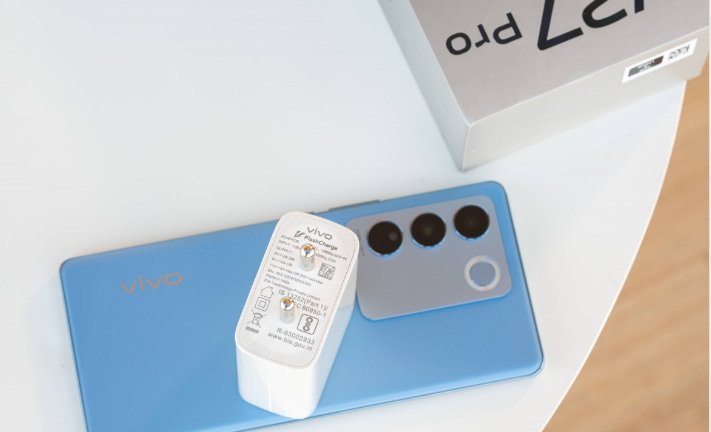
In just 15 minutes, the provided adaptor recharged 42% of the vivo V27 Pro battery. We increased our battery to 71% after another 15 minutes on that charger.
Speaker Volume and Performance :
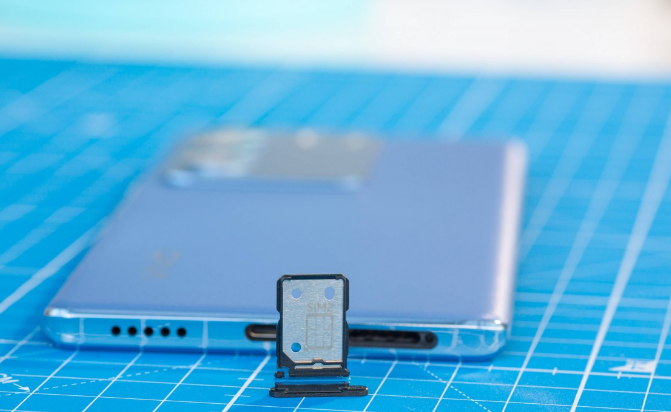
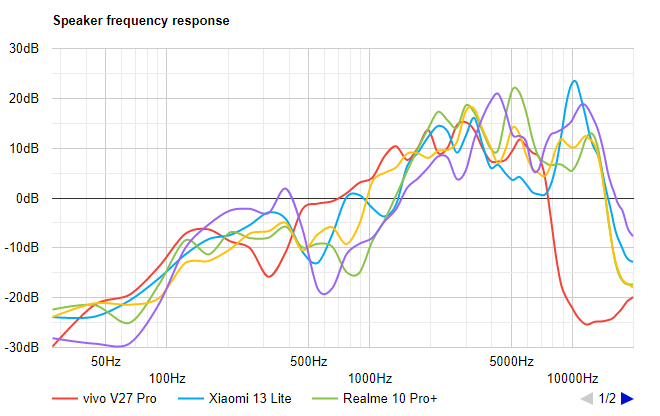
There is only one speaker on the vivo V27 Pro, and it is located at the foot of the device.
On our volume test, the V27 Pro received an Average rating. Additionally, the vocals are excellent, but the bass and high frequencies are average. We would also characterise the sound quality as average.
Over Android 13, there is Funtouch 13 :
The vivo V27 Pro runs an exclusive Funtouch OS v13 layer on top of Android 13 out of the box.
The vivo V25 Pro used Funtouch v12, and this new iteration isn’t at all different in look and feel. And it’s a pretty customized and customizable experience.
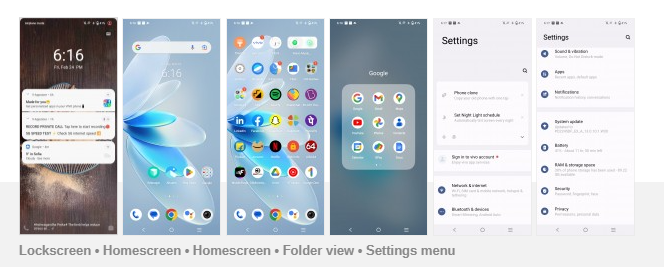
The recent apps menu contains one of the helpful proprietary tools. The standard carousel arrangement and a horizontal tile layout, which is similar to MIUI but only scrollable horizontally, are both options. You don’t need to search the menus for the setting; it is accessible right there.
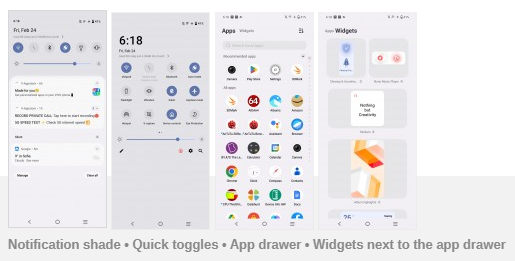
The notification shade is fairly well-known, and Funtouch is avoiding Google’s big bubble-style quick toggles in favour of these straightforward circular buttons. The Android 13 AOSP colour palette UI allows you to change the accent colour in this instance, which is set to blue by default. There is still a potent theming system available.
The most frequently used apps are listed in an expandable suggested apps category at the top of the app drawer. By using the vertical scroller on the right, you can highlight the apps that start with the letter you’ve chosen.
Performance :
The MediaTek Dimensity 8200 chipset’s first smartphone to tour our office is the vivo V27 Pro. It’s a high-end midrange chip designed to give less expensive smartphones functionality comparable to flagship models.
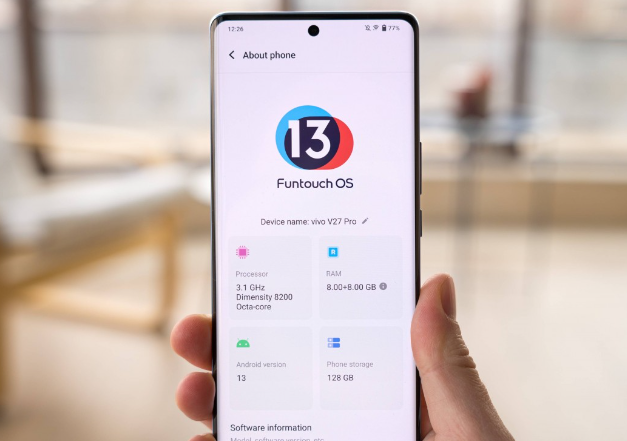
The Dimensity 8200 is an overclocked version of the Dimensity 8000 chip. It is manufactured using a 4 nm process and includes HyperEngine 6.0, which enables Vulkan SDK for raytracing in games, improving FPS, and intelligent resource optimization.
The powerful CPU is what drives the significant changes from predecessors, although Mediatek added better camera support and the Imagiq 785 ISP. It will enable HyperEngine, a collection of tools designed to boost gaming speed in smartphones that compete with flagship models.
The new microprocessor has an upgraded octa-core processor that continues to use four Cortex-A78 and four Cortex-A55 cores, but in a noticeably different and more power-efficient configuration. Currently, there is a large Cortex-A78 CPU with a 3.1GHz clock, followed by three Cortex-A78 performance processors running at 3.0GHz and four Cirtex-A55 processors operating at 2.0GHz.
The Mali-G610 MC6 GPU is the same, but it now runs at 950MHz instead of the previous versions’ 860MHz.
The new chip’s downlink speed, Wi-Fi 6E, Bluetooth 5.3, and dual-5G connectivity were all passed down from its forebears in terms of connectivity.
The chipset utilises UFS3.1 storage and LPDDR5X RAM. Vivo also sells 8+256 and 12+256 versions, but our device has 8GB RAM and 128GB of storage.
Both Sides have high-quality Cameras :
Three cameras are on the rear and one is on the front of the vivo V27 Pro. A 50MP OIS main camera, an 8MP ultrawide camera, and a 2MP macro camera are part of the rear setup. A ring-LED strobe is also present. A 50MP AF selfie camera is also present, but unlike other vivo phones, this one lacks an LED light.
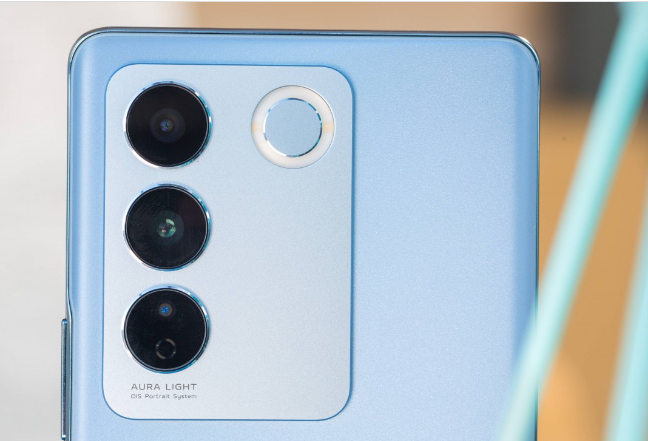
The main camera uses a Sony IMX 766 1/1.56 50MP primary camera “With a 23mm f/1.88 electronically stabilised lens, 1.0 m pixels, and PDAF, the quad-Bayer sensor has these features. Support for 2x lossless magnification is available.
The 8MP OV8D1 sensor and 16mm f/2.2 lens together make up the ultrawide camera. The focal point is set.
The 24mm f/2.4 lens and fixed focus at 4 centimetres are used by the macro camera, which has a 2MP OmniVision OV02B1 sensor.
Samsung ISOCELL S5KJN1 1/2.76, a 50MP camera, is used on the front “sensor with 0.64-m pixels and a Tetracell filter. A 24mm f/2.45 lens is attached to the sensor, which enables PDAF.
Camera app :
The camera app is quite recognisable because it resembles the ones found on the V and X line of smartphones. A simple zoom selector with increments of 0.6x, 1x, and 2x is available. The flower icon next to the hamburger menu is where you go to get to the Macro option.
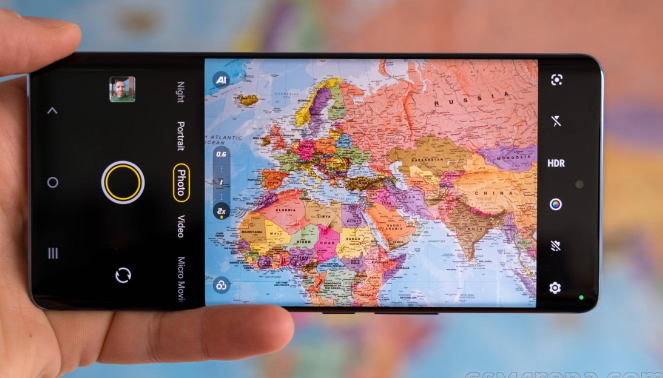
The primary modes are organised in a carousel pattern, and you can change between them by swiping or tapping on one of the modes that is currently displayed. The remaining settings are listed under the More tab, where you can also adjust which ones are displayed in the viewfinder.
You have complete control over the autofocus, white balance, shutter speed, ISO, and exposure settings in the Pro option. On both the main and ultrawide cameras, you can do this. For those of you who are just starting out in photography, there is material available that explains all of the options above. Another possibility is to shoot in RAW.
Low-light photo quality :
The main camera’s low-light pictures are excellent; there is plenty of resolved detail, standing exposure, the noise is kept remarkably low, and the colours are striking.
There are very few visible blown highlights and the dynamic range is excellent—much higher than on many other phones.
The animation on the virtual shutter and the requirement to remain still for approximately one second show that some form of smart stacking akin to Night Mode is still in use where Auto Night Mode is not active (only a pop-up suggestion).
Portrait mode :
There are two zoom choices available in Portrait mode: 2x and 1x, with 2x being the default. The pictures we took at a magnification of two times were taken using lossless processing, and while they don’t exactly excel in detail, they are still quite good. The dynamic range is excellent, the topic is well-exposed, and the colours are vibrant. The simulated blur is attractive, and the backdrop separation is excellent.

Although the 1x pictures don’t have the greatest level of detail, they are just as good as the 2x zoomed ones in terms of attractive subjects, background blur, and subject separation.
Selfie Camera :
The 50MP front camera has a high-resolution sensor and enables autofocus. Additionally, the 12.5MP photos it records are stunning! The dynamic range is exceptional, the noise is essentially nonexistent, and the degree of detail and sharpness are astounding. We consider the processing to be mature and natural-looking, the contrast to be perfect, the colours to be quite appealing.
Shoot in 50MP if you want, but downscaling it to 12.5MP won’t add any more information. We do not perceive any advantages to using the high-res option despite the fact that there is some sort of intelligent processing employed, which prevents the pictures from being simply upscaled from the default output.
Our opinion :
Regardless of whether or not it has a color-changing (blue) back, the vivo V27 Pro is a fantastic smartphone with a very appealing design (black model). The phone’s OLED display is decent and smooth, and its performance and stability were outstanding.
It’s good that the vivo V27 Pro has a long battery life and charges quickly. But the primary camera’s excellent picture and video quality (2x lossless zoom) and the striking selfies are what will stick in our memories. The vivo V27 Pro has the potential to become a fan favoured cameraphone on a budget because few mid-rangers provide such high-quality pictures.
The vivo V27 pro is not flawless, and neither is any smartphone. The stereo speakers and video stabilisation for the 4K selfie movies are the most glaring omissions, which is such a waste! We would have also valued some kind of entry security.
We still consider the vivo V27 Pro to be one of the most capable mid-range smartphones available, ideal for both gaming and photography, despite these omissions. We highly advise you to consider the phone as your daily driver if it is offered in your market because it is one of the best all-around offers in its price range.