Introduction :
A fresh visage on the market is always welcome. Or, in this instance, a few very well-known, very ancient ones that have branched out into the smartphone industry. The iconic ThinkPad laptop company has origins in IBM and the 1990s. Later, in 2005, Lenovo bought it as a component of IBM’s personal computer company. The other prominent name engaged in the development of the ThinkPhone is Motorola Mobility, a legendary company that was acquired by Google in 2011 and subsequently merged with Lenovo in 2014. The Motorola ThinkPhone is undoubtedly one of the outcomes of this rich history, though this oversimplifies the timeline and the depth of the different acquisition events.

So what we have in our palms is a novel—at least until now—product developed by Motorola for the Android OS and actual phone’s internals and infused with traditional ThinkPad features and aesthetics. It was introduced by Lenovo.
Details of the Motorola ThinkPhone at a real look:
- Body: 158.8×74.4×8.3mm, 189g; Glass front (Gorilla Glass Victus), aramid fibre back, aluminum frame; IP68 dust/water resistant (up to 1.5m for 30 min), Drop-to-concrete resistance from up to 1.3m, MIL-STD-810H compliant.
- Display: 6.60″ P-OLED, 1B colors, 144Hz, HDR10+, 1080x2400px resolution, 20:9 aspect ratio, 399ppi.
- Chipset: Qualcomm SM8475 Snapdragon 8+ Gen 1 (4 nm): Octa-core (1×3.19 GHz Cortex-X2 & 3×2.75 GHz Cortex-A710 & 4×1.80 GHz Cortex-A510); Adreno 730.
- Memory: 128GB 8GB RAM, 256GB 8GB RAM, 256GB 12GB RAM, 512GB 12GB RAM; UFS 3.1.
- OS/Software: Android 13.
- Rear camera: Wide (main): 50 MP, f/1.8, 1/1.5″, 1.0µm, multi-directional PDAF, OIS; Ultra wide angle: 13 MP, f/2.2, 120-degree, 1.12µm, AF; Depth: 2 MP, f/2.4.
- Front camera: Wide (main): 32 MP, f/2.5, 0.7µm – ROW model; Wide (main): 16 MP, f/2.0, 1.0µm – PRC model.
- Video capture: Rear camera: [email protected], [email protected]/60fps, [email protected] HDR10, [email protected]/60/120/240/960fps, gyro-EIS; Front camera: [email protected], [email protected]/60fps.
- Battery: 5000mAh; 68W wired, 15W wireless.
- Misc: Fingerprint reader (under display, optical); NFC; stereo speakers.
Design :
The iconic black and boxy look of the ThinkPad laptop line is undoubtedly well known to the majority of you. In a highly updated form, it has continued to exist today. But the initial inspiration is still very much present. Actually, that has its roots in the Japanese bento container.

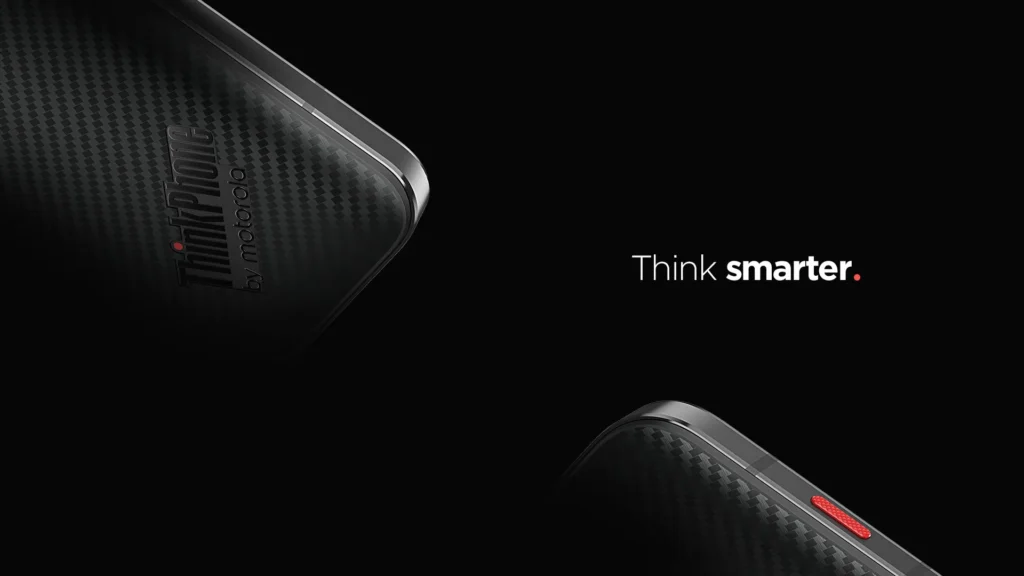
However, the ThinkPhone isn’t nearly as bulky. It has its fair share of curves, especially on the rear of the device where the back panel folds into the middle frame, just like a contemporary ThinkPad laptop. For a modern phone, the shape itself is neither unusual nor special, but the carbon fibre pattern is distinctively and unmistakably ThinkPad.
The rear of the ThinkPhone almost appears to be a pre-applied skin, but it is a bit fancier than that because it also has a fine texture. In our view, the ThinkPhone logo is expertly made on the back. It rests on its own layer and has a kind of embossed texture on the back. Sadly, unlike on some Thinkpads, the tiny red dot in the I does not illuminate.

The ThinkPhone’s frame is fairly ordinary aside from the fact that it attracts fingerprints like crazy. It is only reliable metal.

Even so, the design team was able to include another distinctive feature of the ThinkPad design—a vivid red accent on a second customizable button on the phone’s left side. Even the top edge is textured, much like the renowned track point on ThinkPad laptops.
The phone’s front shows very little border around the display when we turn it around. Even so, Motorola was able to squeeze a few sensors into the upper frame on the earpiece’s left side.
Build quality :
The toughness and durability of the ThinkPad line has always been a point of honour. Although not precisely a rugged laptop in the true sense of the word, these devices are built to withstand abuse and have repeatedly shown to be able to do so. The ThinkPhone seems to follow the same reasoning. Although it is not precisely the typical rugged phone that is big and awkward, it is still built to last.

The ThinkPhone, which has a MIL-STD-810H certification and can withstand drops onto concrete from up to 1.3 metres, was already noted. Additionally, it has IP68 intrusion protection, meaning it should be safe for up to 30 minutes in freshwater up to 1.5 metres deep.
The chassis is made of aircraft-grade aluminium, which feels incredibly sturdy and flexes hardly at all. Additionally, a thin aramid fibre for the back is listed in the components list. Additionally, Gorilla Glass Victus is guarding the display on the front. When everything is taken into account, the ThinkPhone appears to be well-suited for prolonged endurance.
Connectivity :
The ThinkPhone has two Nano-SIM slots and SA/NSA/Sub6 5G connectivity, as was already stated. There is also a variant with a single SIM. There is tri-band Wi-Fi 6e for local access, as well as Bluetooth 5.2 with LE and NFC. There is no radio and no 3.5mm port on board. Additionally, the ThinkPhone has GPS, GLONASS, and Galileo.
There are a wide variety of instruments built into the ThinkPhone. On North American units, this contains a magnetometer and compass combination (Haechitech mxg4300), a light and proximity sensor combination (Sensortek stk3acx), an accelerometer and gyroscope combination (TDK-Invensense icm4x6xx), and a barometer.
The USB Type-C port’s powers were also examined. It performs USB Host or OTG functions as promised. Beyond that, the ThinkPhone belongs to a small set of gadgets that can output video via USB alt-mode. Motorola’s Ready For desktop environment is being pumped through to an external monitor in the instance of the ThinkPhone. Casting to a TV or Computer while using wireless technology will also produce the same outcome.
A fantastic 6.6-inch 144Hz display :
Undoubtedly, one of the best features of the Motorola ThinkPhone is the touchscreen. It appears to be very remarkable on paper. On a 6.6-inch diagonal, a 1080 x 2400 pixel resolution equates to a density of about 399 ppi, which is exceptionally clear and precise in person.

Motorola’s display is sufficiently clear. In bright outdoor circumstances, we were able to obtain 514 nits on the slider and an impressive 1069 nits.
High refresh rate :
The Motorola ThinkPhone has a 144Hz refresh rate display, as was already stated. There are four refresh rate choices available in its settings: 60Hz, 120Hz, 144Hz, and Auto. The phone is merely set to a static 60Hz, 120Hz, or 144Hz frequency for the first three, and that’s it.

The ThinkPhone offers additional refresh rate options in addition to 60Hz, 120Hz, and 144Hz. Actually, 60Hz, 90Hz, 120Hz, and 144Hz are on that list. As with other Motorola phones, there is no 48Hz option. With a highly responsive and content-aware system in place, auto refresh rate mode fulfils its promise of AI-driven automatic refresh rate swapping.
Battery capacity :
The Motorola ThinkPhone’s 5,000 mAh battery has a good size. For its 8.3mm profile and 188.5 g weight, that is quite fair.
In our unique test, the ThinkPhone achieved a fantastic battery endurance ranking of 116 hours. The Qualcomm Snapdragon 8+ Gen 1 processor in the ThinkPhone has already demonstrated its efficiency and performs admirably overall. The test findings, both off-screen and on-screen, are excellent.
Charging speed :
A Motorola 68W battery is included with the ThinkPhone. In spite of its maximum production, it is actually quite small. The output values of this device are [email protected], [email protected], [email protected], [email protected], and [email protected] It appears to be based on USB Power Delivery, and with a 20V output, it works well for emergency PD laptop charging as well.

The ThinkPhone’s included adapter allows it to charge fairly quickly. In 15 minutes, we were able to bring it back from the brink of death, and in 30 minutes, 86%. Even though it was far from the fastest charge, a complete charge took just under an hour.
Speakers :
The ThinkPhone has a hybrid stereo speaker setup, with an amplified earpiece handling one channel and a dedicated bottom-firing speaker handling the other. This is a fairly typical practise.
This characteristic makes the ThinkPhone’s speakers less than perfectly balanced, but on the plus side, they can get quite loud. However, there is a lot of distortion at high volume on the ThinkPhone, so that is both a pro and a con. You can be sure that your phone will always ring, at the very least.

However, we advise just sticking with the default Smart Audio option because it does a great job of automatically optimising for the majority of situations.
Clean Android 13 with a security-first tactic :
The ThinkPhone, which is basically a Motorola phone, runs an extremely pristine, almost AOSP-looking version of Android 13 with only a few Moto mods on top. We continue to think that this uncluttered appearance is a selling point that applies to all Moto products.

Recent AOSP versions have large, bubbly buttons—four on the first draw, up to eight on the second—and a full-screen notification shade that make the Quick Settings and notification shade stand out.
I’ll move on to apps, which got a makeover with Android 12. For widgets of various sizes, the widget picker provides responsive samples. By integrating with the Material You theming engine, the new API enables dynamic colouring, enabling widgets to adjust to the wallpaper.
Personalization is the first area; it is here that OS-native auto-theming found a permanent home. In addition to Google’s own wallpapers, there is a large selection of Moto wallpapers available. You can also use AI to make your own wallpaper using images from your gallery.

The motions follow. You’ve probably already noticed Moto’s karate cut motion for turning on and off the flashlight, as well as his twisting motion for opening the camera app. Both continue to function when the gadget is locked.
With face unlock, the lift-to-unlock gesture works well because the device unlocks as soon as you pick it up and glance at the screen. There is also a swipe-to-split feature that launches split-screen productivity. Double-tapping the phone’s back will perform a custom move as well.
Performance :
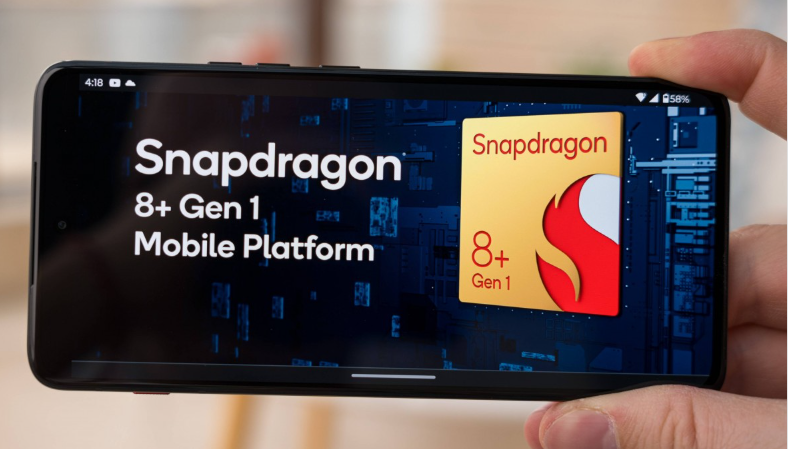
The Snapdragon 8+ Gen 1 processor serves as the foundation of the Motorola ThinkPhone. The fact that the phone doesn’t use Qualcomm’s most recent and greatest chip suggests that it has been in production for some time. Even so, there’s no denying that the ThinkPhone is a powerful flagship gadget. A main Cortex-X2 core, three Cortex-A710 cores running at 2.75 GHz, and four Cortex-A510 cores operating at 1.80 GHz make up the Snapdragon 8+ Gen 1’s octa-core CPU configuration. It has an Adreno 730 Processor.
The ThinkPhone combines said chipset with up to 512GB of non-expandable UFS 3.1 storage and either 8GB or 12GB of Memory. The following combinations are offered: 128GB with 8GB of RAM, 256GB with 12GB of RAM, and 512GB with 12GB of Memory. The upper tier models should perform a little bit better in some compound benchmarks like AnTuTu because our review device has 8GB of RAM and 256GB of storage.
An autofocus ultrawide camera and three back cameras :
The ThinkPhone almost completely copies the Motorola Edge 30 Fusion’s camera setup. A 50MP OmniVision OV50A sensor and an f/1.8 lens are used in the primary camera. It has a 1/1.5″ sensor size, 1.0 m pixels, and a natural resolution of 8192×6144. Phase detection autofocus (PDAF) is made possible by QPD across the full image array of the sensor. An OIS-capable lens is also used here to apply the sensor.
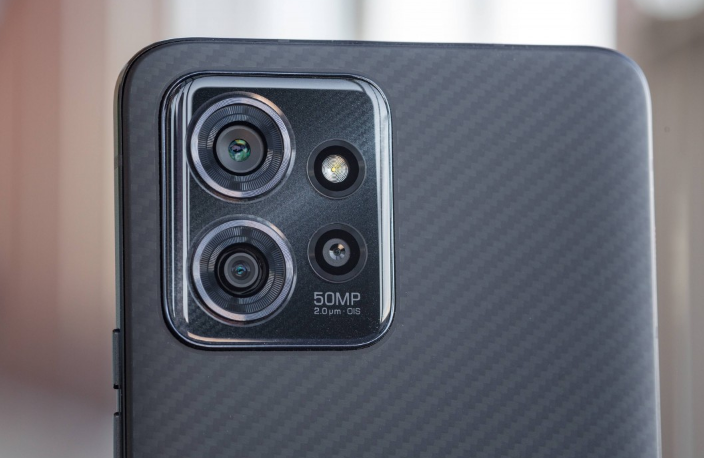
Now let’s move on to the ultrawide camera. It uses a 13MP SK Hynix HI1336 sensor with an f/2.2 lens as its basis. It has a 1/3-inch diagonal and 1.12 million pixels “image format. It also has sufficient resolution (4208 x 3120 pixels), which is not always the case for many contemporary ultrawide sensors, to record [email protected] The ultrawide camera has focusing as well, enabling it to function as a macro camera as well.
The depth sensor on the ThinkPhone is possibly last but not least. A GalaxyCore GC02M1B camera with 1.75 m individual pixels and a 1/5 is employed “image format. It is a straightforward 2MP, f/2.4 camera.
Selfie camera :
A 32MP face camera is present on the ThinkPhone, but it is not a Moto Edge 30 Fusion replacement. It makes use of a different sensor, and despite some contradictory material we’ve discovered online, it lacks autofocus.
The ThinkPhone and Moto Edge 30 Fusion diverge in their face cameras. The OV32B40, a 32MP camera provided by OmniVision, is used in the international variant. It has 0.7 m pixels per row and a 1/3″ optical size. It incorporates a 4-cell colour filter and on-chip hardware re-mosaic to deliver 32MP Bayer output in real time at high resolution. The ThinkPhone, which was created especially for the Chinese market, uses a 16MP selfie in its place.

The camera software was developed by Motorola, just like the rest of the OS. As a result, it hasn’t altered much from what we saw on earlier Motos.
The camera settings are organised in a carousel formation that can be customised. The less frequently used shooting modes are found in the hamburger menu at the right end of the carousel.
Video quality :
The primary camera on the ThinkPhone has a maximum quality of [email protected] for video recording. Videos are automatically saved in the h.264 format with an AVC video stream (roughly 50 Mbps for 4K and 130 Mbps for 8K) and a stereo AAC audio file (256 kbps, 48 kHz) inside an MP4 container. The camera settings also include a choice for H.265 (HEVC) encoding.
Videos in 4K actually look crisper than those in 8K. Other than that, the characteristics of the two are the same. On this phone, we’d definitely stick to 4K recording.
The ultrawide camera can record video up to [email protected], something you don’t see on every ultrawide today because many are only capable of 1080p. Additionally, it can be saved in MP4 file with AAC and standard AVC (around 50 Mbps). Here, quality is excellent. Although not precisely a good match to the main camera, the colours are nice, contrast is good, and detail is sufficient for an ultrawide. Additionally, there aren’t any apparent flaws like corner softness or excessive distortion, and the dynamic range is fairly broad.
Our view :
It is quite challenging to accurately summarise the ThinkPhone’s many subtleties. It is unquestionably not your typical smartphone; rather, it is a distinctive and extremely particular device, both in terms of its core features and intended use. Though legally available for end users to purchase, the ThinkPhone is primarily a business-to-business enterprise product. Business standards, demands, agreements, and services operate somewhat differently from how they do on the open market. Therefore, determining the ThinkPhone’s actual value and pricing competitiveness is a difficult job.

The ThinkPhone has a lot going for it, beginning with its superb construction out of materials like aluminium, aramid fibre, and Gorilla Glass Victus. Obtaining an IP68 and MIL-STD-810H certification for the phone. Even though appearance is extremely subjective, we think the ThinkPhone is gorgeous. Its overall aesthetic is recognisable and oozes classy business appeal.

But the ThinkPhone is far from ideal. We were disappointed in its camera arrangement in particular. The stereo speaker arrangement is the same. Since the ThinkPhone costs EUR 1000, it is difficult for us to recommend it as a consumer buy on the open market today. It merely fails in a few crucial areas. Having said that, the ThinkPhone might be a good choice in the right circumstances if you end up with one through your job or are looking to buy a fleet of devices for your company.