INTRODUCTION :
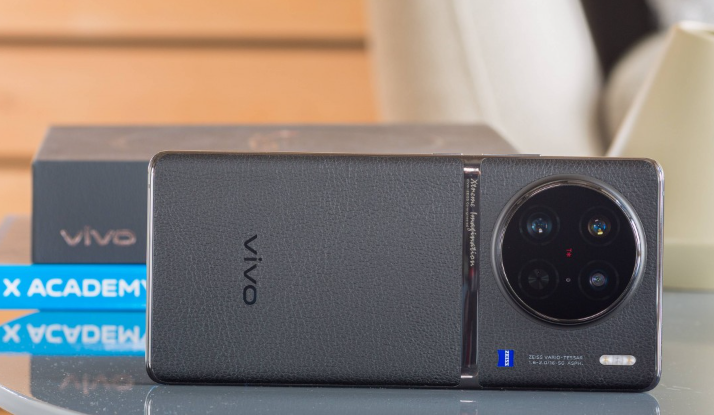
Vivo’s flagship lineup is the strangest we’ve ever seen, with each new generation differing from the prior one in terms of features, camera types, and screen resolutions. The only things we can count on are camera technology upgrades and chipet advancements. That is how the new vivo X90 Pro is described.
The newest X90 top-tier lineup includes three smartphones: the cutting-edge X90 Pro+, the standard X90 Pro, and the toned-down X90. Today, we’ll look at the vivo X90 Pro, the first smartphone driven by the new Dimensity 9200 chipset and one of the few with a 1-inch camera sensor.
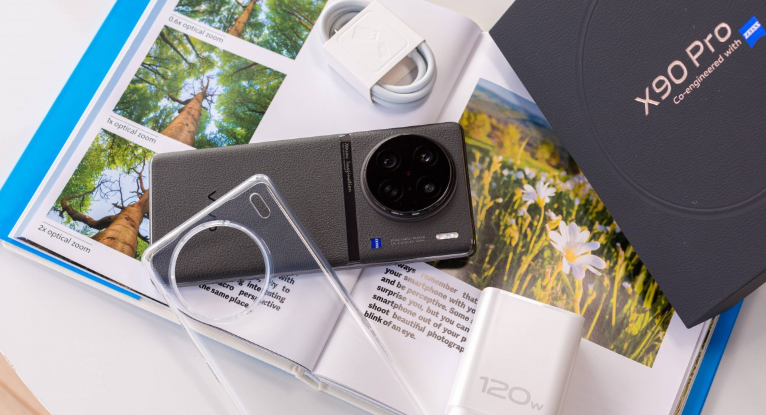
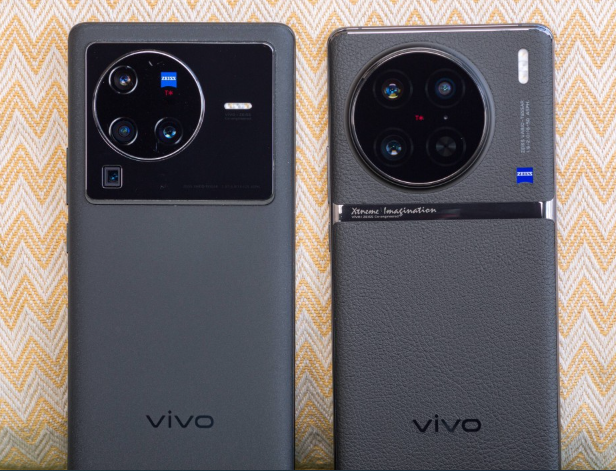
- The design changes begin with the vivo X90 Pro, which now has a larger camera housing with a perfectly round form.
- The back panel is covered in black vegan leather, and there are no other colour options available, at least not in foreign markets.
- The X90 Pro is powered by MediaTek’s flagship SoC, the Dimensity 9200, which features modern CPU cores, including X3, an 11-core GPU, and more than enough Memory and storage.
- There is also a massive heatsink, possibly the biggest ever placed in a phone, which should help provide better long-term performance.
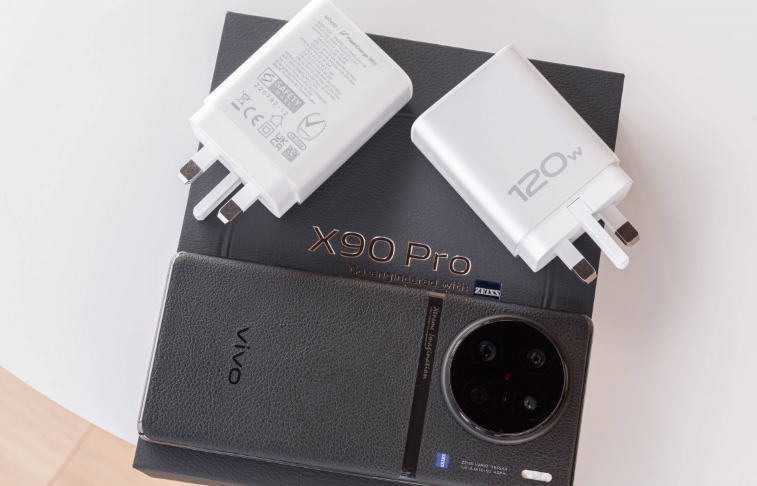
- The charging capabilities of the new vivo X90 Pro are also quite impressive;
- it allows 120W rapid wired charging (50% in 8 minutes according to official specs) and 50W fast wired charging.
- The X line has always been about cameras, and the vivo X90 Pro is no exception.
- The main camera is a 50MP Sony IMX 979 with a 1″ sensor, the same as on the Xiaomi 12S Ultra.
- There’s also a 50MP 2x telephoto lens and a 12MP ultrawide camera with focusing.
- The entire imaging system is powered by the most recent iteration of vivo’s X2 image processing chip and Zeiss lenses.
6.78-INCH 1260P OLED DISPLAY :
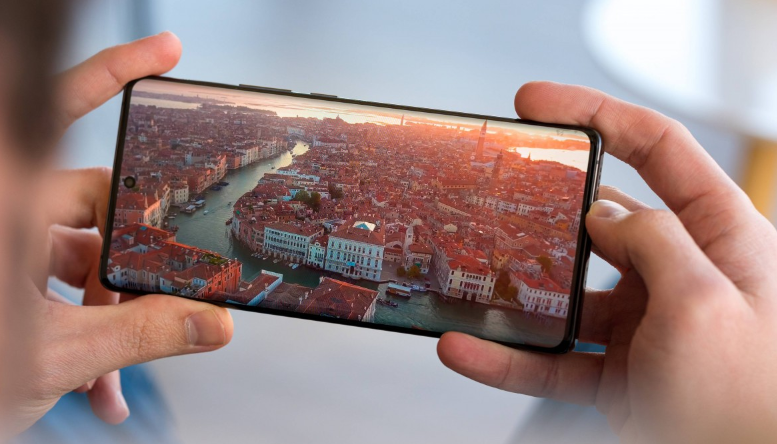
The 6.78-inch OLED screen on the vivo X90 Pro has a 10-bit colour depth, HDR10+ approval, and 1260p resolution. For those who are sensitive to PWM pulsations on AMOLED screens, the panel offers a 120Hz refresh rate and high-frequency 2,160Hz PWM dimming. The display’s maker, BOE, used its exclusive Blue Diamond Pixel arrangement in the screen, which is said to extend the OLED’s lifespan by 30% and enhance its brightness and colour capabilities.
The glass covering the display has a small curve to it, but the manufacturer is unknown. Schott Xensation Up glass was used in the vivo X80 Pro and X70 Pro, and there is a good possibility that the vivo X90 Pro will have the same kind of security.
Let’s discuss the panel specifications. It has a vertical measurement of 6.78 inches and a resolution of 2,800 x 1,260 pixels, or 453 ppi. The screen can display over a billion hues thanks to support for 10-bit colour depth. This panel has fixed three fixed steps – 60Hz, 90Hz, and 120Hz – as opposed to the LTPO3 panel on the vivo X80 Pro, which provided truly dynamic refresh rate.
Vivo hasn’t disclosed any brightness figures other than the highest brightness of 1,300 nits. Our display test is now complete, and we recorded 934nits of maximum automatic brightness and 517nits of maximum human brightness.
Whether you are using Auto Brightness or not, the sunlight boost appears to be accessible, but if Auto Brightness is off, it occasionally just sharply reduces the contrast rather than increasing the brightness past 520 nits. The highest manual brightness is also dependent on the selected colour mode, as we did measure 540nits of brightness when testing the sRGB colour accuracy.
BATTERY LIFE :
- A 4,870mAh battery powers the vivo X90 Pro, compared to 4,700mAh and 4,450mAh for the X80 Pro and X70 Pro, respectively. In order to enable the extremely quick 120W fast charging, the battery has been divided into two separate cells.
- Our battery test is complete, and the vivo X90 Pro received a 96h endurance grade. The onscreen evaluations, which included continuous movie playback for 18 hours and 16 minutes and 16 hours of web browsing, were excellent.
- Oddly, the battery settings’ preset fast-charging setting was disabled, limiting the charging capacity to roughly 20W–30W.
- The X90 Pro refilled to 30% in 5 minutes and to 50% sharp in 8 minutes, as promised by Vivo, which we can attest to.
- With their 5,000mAh batteries and 120W fast chargers, the Xiaomi 12T and 12T Pro required about the same amount of time to fully charge (about 24 minutes).
- Additionally, the vivo X90 Pro enables reverse wireless charging (which must be switched on/off from the battery menu) and 50W fast wireless charging. Additionally, reverse wired charging is allowed, and since a USB-C to C cable is included in the package, you won’t need any adapters.
VOLUME AND SOUND CLARITY :
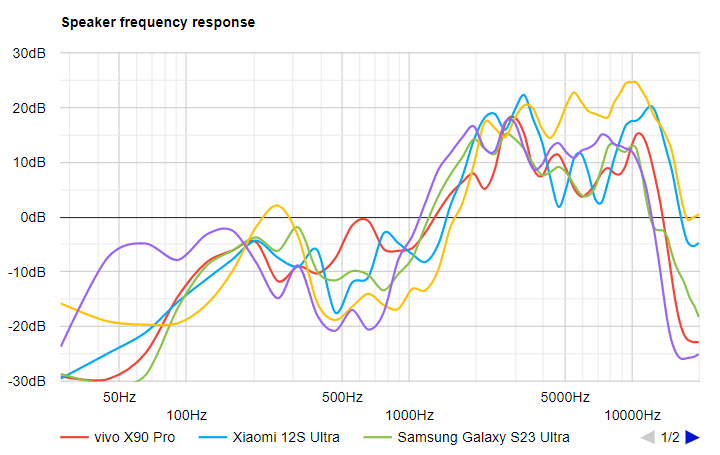
- The vivo X90 Pro has two audio speakers; one is located at the bottom of the phone and serves as both an earpiece and a speaker.
- Although the top speaker is a little quieter than the lower one, the fact that it faces forward more than makes up for its shortcomings. In light of this, the system provides superb audio balance regardless of how you hold the phone.
- The vivo X90 Pro’s stereo speakers received a Very Good rating on our loudness test, and they do produce a loud sound when playing audio and when the phone rings. The audio quality is also excellent; it has pleasing voices and mid-tones as well as a well-presented high range.
- We can’t rank the X90 Pro audio quality as excellent because we’ve heard phones with slightly richer and deeper sound coming from their speakers (like the Galaxy S23 series). However, it is really very good.
ZEISS CAMERA OF THE FUTURE :
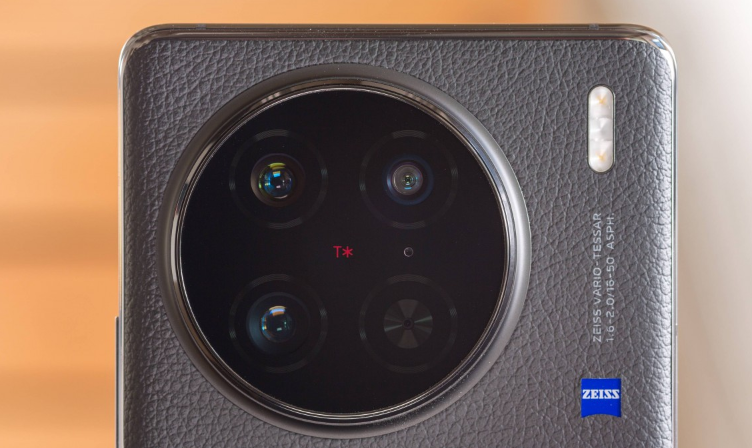
- When it comes to its camera technology, Vivo has always been erratic. Each new generation provides a distinct assortment of cameras, sensors, lenses, stabilisation techniques, and optical zooms. The only constant is the cooperation between vivo and Zeiss, which once more results in the lenses having what the German optical experts refer to as T* coating for reducing ghosting.
- Three cameras—a 50MP main camera, a 50MP telephoto (portrait) camera, and a 12MP ultrawide camera—are located on the back of the vivo X90 Pro. All three cameras have autofocus and can record 4K video.
- The X90 Pro is the first smartphone from Vivo to utilise 1 “It’s the star of this new system, the same Sony IMX 989 camera we saw on the Xiaomi 12S Ultra. We have previously described what the 1 “means that, in our 12S Ultra review, the term “sensor size” refers to the diameter of the video camera tube required to project an image large enough to fill the sensor size. More information on that is available here.
- The 50.3MP Sony IMX 989 sensor is the largest smartphone camera currently available, with 1.6 mm individual pixels and a Quad-Bayer RGB colour filter. A 23mm f/1.75 stabilised (OIS) lens with high transmission glass (1 glass + 7 plastic parts and Zeiss T* coating surrounds the sensor.
VIDEO CAPTURE :
- On each of its cameras, the vivo X90 Pro enables video recording. The main and telephoto cameras both support 8K at 24 fps, while the three rear cameras can capture movies up to 4K at 60 fps.
- The face camera can only capture in [email protected] A recent firmware update for the vivo X90 Pro+ introduced 4K video support for the front camera; consequently, the X90 Pro might get it soon enough.
- All cameras and resolutions enable electronic stabilisation. On the main and portrait cameras, it can be turned off, but doing so also disables the optical one.
- For 4K and 8K segments, respectively, the video bitrate is around 50Mbps and 100Mbps. The sound quality of the audio, which was captured in stereo at 256 kbps, is excellent.
- The main camera produces stunning 4K daylight movies! The sharpening is just right, the resolved detail is flagship-worthy, and the general processing seems mature, producing pleasant, natural-looking footage. The dynamic range is broad, the contrast is appealing, and the colours are vibrant and generally correct.
- The main camera is capable of 8K24 video recording, and the videos look fantastic. The detail from the 8K footage was much greater than we had anticipated, and even though some of the foliage appears artificial, it is still free of noise and artefacts, and the rest of its properties are comparable to the 4K clips.
- The standard 4K low-light videos are also very excellent. They have a high dynamic range with strong highlights, excellent exposure, excellent colour saturation, and more than enough detail for a low-light film. These 4K low-light videos are some of the finest we’ve recently seen because the noise is kept to a minimum.